

Now Reading: Tim Sweeney Signed Away His Right to Criticize Google Until 2032: Here Is Everything That Is in the Epic-Google Deal
-
01
Tim Sweeney Signed Away His Right to Criticize Google Until 2032: Here Is Everything That Is in the Epic-Google Deal
Tim Sweeney Signed Away His Right to Criticize Google Until 2032: Here Is Everything That Is in the Epic-Google Deal

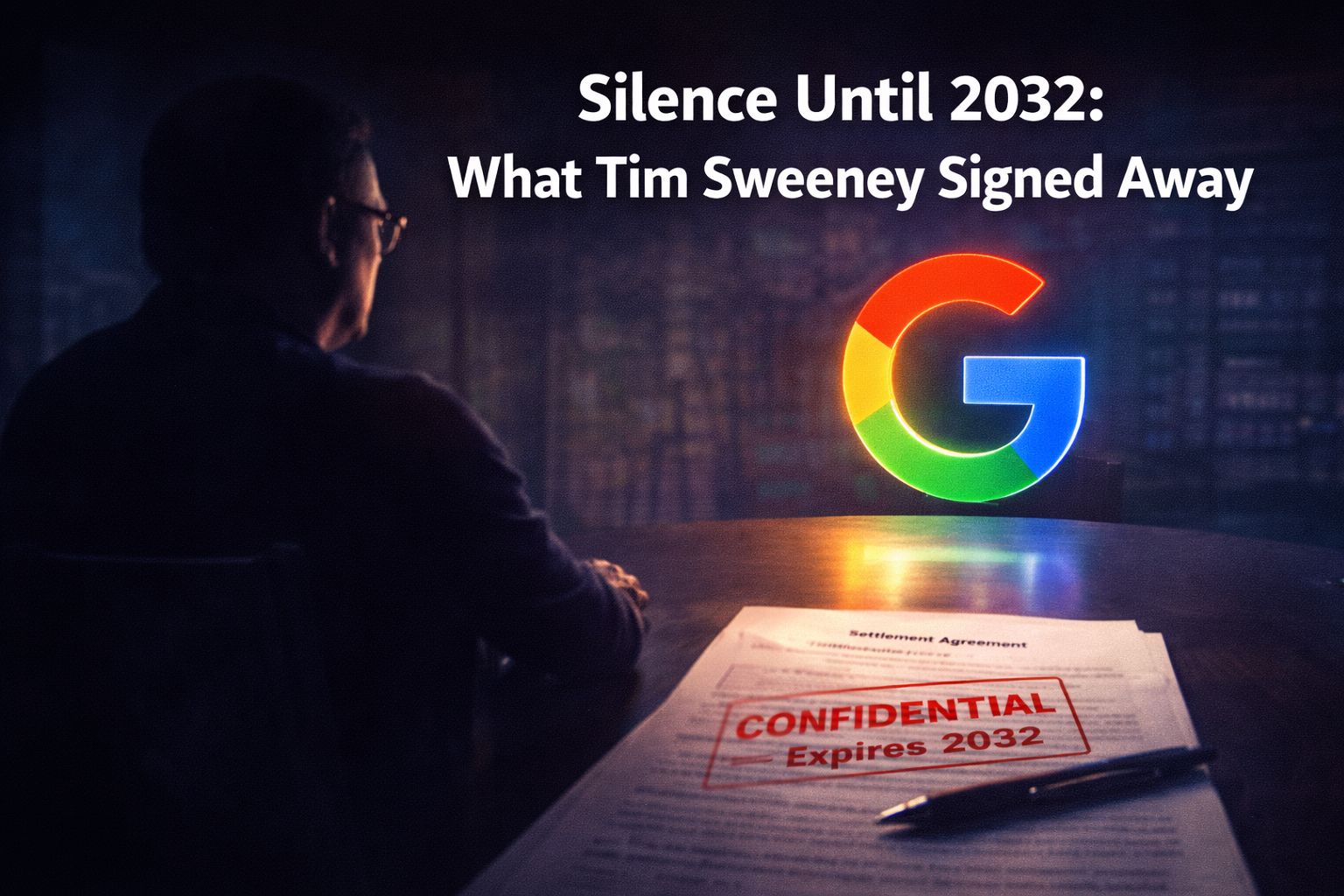
Epic Games CEO Tim Sweeney spent years as one of the most vocal and aggressive critics of Google’s app store practices, filing the antitrust lawsuit that produced a landmark ruling against Google’s monopolistic behavior in the Android app distribution market. The jury verdict was a genuine win for app developers everywhere. The settlement that followed is more complicated.
Thank you for reading this post, don't forget to subscribe!Among the provisions of the settlement agreement that emerged, Sweeney agreed not to publicly criticize Google’s app store practices for a period that extends to 2032. For a CEO whose competitive identity has been substantially built on that criticism, this provision is both commercially pragmatic and symbolically significant. Here is what else is in the deal, and what it means for app store competition.
The Antitrust Verdict That Preceded the Settlement
The jury in the Epic v. Google case found in December 2023 that Google had illegally maintained a monopoly in the Android app distribution market. The verdict covered Google’s practices of providing financial incentives to potential competitors to not launch competing app stores, its Project Hug program that paid developers to remain exclusive to the Play Store, and the combination of its app store dominance with control over Android device default settings that steered users away from competing distribution options.
The verdict was a significant legal victory for Epic and for the principle that platform operators have antitrust obligations in their digital marketplaces. Importantly, it occurred simultaneously with Epic’s loss in its parallel case against Apple, where the court found Apple’s App Store practices did not meet the legal threshold for monopolistic behavior under existing antitrust doctrine.
Why Epic Settled After Winning the Verdict
Winning an antitrust verdict and winning the remedy are different things. The remedies phase of antitrust litigation, where the court determines what the losing party must change about its behavior, is frequently more contested and protracted than the liability phase. Epic’s choice to negotiate a settlement rather than litigate through the remedies phase reflects both the costs of continued litigation and an opportunity to negotiate specific, immediately implementable outcomes rather than waiting for a court-imposed remedy.
The Settlement vs. Verdict Tradeoff: A negotiated settlement can produce more specific, immediately operational outcomes than a court-imposed remedy, but it requires the winning party to compromise on what they could theoretically obtain through continued litigation. Sweeney’s silence provision is one piece of that compromise. The question is whether what Epic obtained was worth what it gave up.
What Epic Got in the Settlement
Reduced Commission Rates
The settlement includes Google reducing its Play Store commission from 30 percent to 11 percent for Epic’s games, and by extension establishing precedents for the commission rate structure that affects all developers negotiating with Google. For Epic’s Fortnite specifically, which generates significant revenue through in-app purchases, even a modest commission reduction translates to hundreds of millions of dollars in reduced fees over the settlement period.
Third-Party App Store Access
The settlement includes provisions that improve the ability of third-party app stores and direct-to-consumer app distribution to reach Android users. Specific requirements around how Android devices present alternative installation options to users and how Google must treat competing stores in search and recommendation contexts address the core practices identified in the antitrust verdict.
Fortnite Return to Google Play
The settlement enables Fortnite’s return to the Google Play Store, from which it was removed in 2020 when Epic implemented its own direct payment system in violation of Play Store terms. Fortnite’s return gives Epic access to the full Google Play distribution channel and the hundreds of millions of Android users who access the Play Store as their primary app discovery mechanism.
What the Silence Provision Means
The provision preventing Sweeney from publicly criticizing Google’s app store practices until 2032 is unusual in antitrust settlements and has generated significant discussion about what it reveals about the negotiation. Settlement agreements commonly include restrictions on disparaging the other party, but a seven-year restriction on a CEO who had made public criticism of app store practices a core part of his competitive and policy identity is a notable compromise.
The practical significance of the silence provision depends on interpretation. Sweeney can presumably still comment on industry-wide issues, advocate for antitrust policy changes through trade associations, and participate in regulatory proceedings. What he cannot do is make the direct, pointed public criticisms of Google’s specific practices that had become a signature of his public presence.
What It Means for App Store Competition
The Epic v. Google outcome, verdict plus settlement, represents meaningful progress in app store competition even with its limitations. The commission reduction creates precedent and pricing pressure. The distribution access improvements address specific chokepoints in Android app discovery. And the antitrust verdict itself creates legal precedent that other jurisdictions and regulators can build on.
The settlement does not fundamentally restructure Google’s control over Android app distribution. Google remains the dominant gatekeeper, with a smaller commission on Epic’s specific titles and some behavioral constraints around competing stores, but without the structural remedies that would create genuine competition in Android app distribution.
Bottom Line: Tim Sweeney signed away several years of his voice as a critic in exchange for commercially valuable settlement terms. Whether that trade was worth it depends on how much impact his continued public criticism would have had versus how much the settlement terms are worth in reduced commissions and improved distribution access. The antitrust fight is not over, but its most visible combatant has agreed to fight quietly for a while.
Related: Fortnite Returns to Google Play | Google Play Store Fee Reduction | Xbox in Danger Microsoft Strategy
Related Posts

Stay Informed With the Latest & Most Important News



Top News
- Google’s AI-Powered Workspace in Search Is Now Available to All US Users: Here Is What Actually Changed
- How Jeffrey Epstein Used Silicon Valley’s Network: What the Reporting on Reid Hoffman and Tech’s Elite Reveals
- Where to Preorder the iPhone 17E Right Now: Every Deal Ranked Before the March 11 Launch
- Google Apps Experience and Games Level Up: The Programs That Could Cut Your Play Store Commission Significantly
- Google Is Not Waiting for a Settlement: It Just Killed the 30 Percent App Store Fee Unilaterally












Advertisement