
Now Reading: The Trap Anthropic Built for Itself: How Safety Branding Became the Company’s Most Complicated Asset
-
01
The Trap Anthropic Built for Itself: How Safety Branding Became the Company’s Most Complicated Asset
The Trap Anthropic Built for Itself: How Safety Branding Became the Company’s Most Complicated Asset

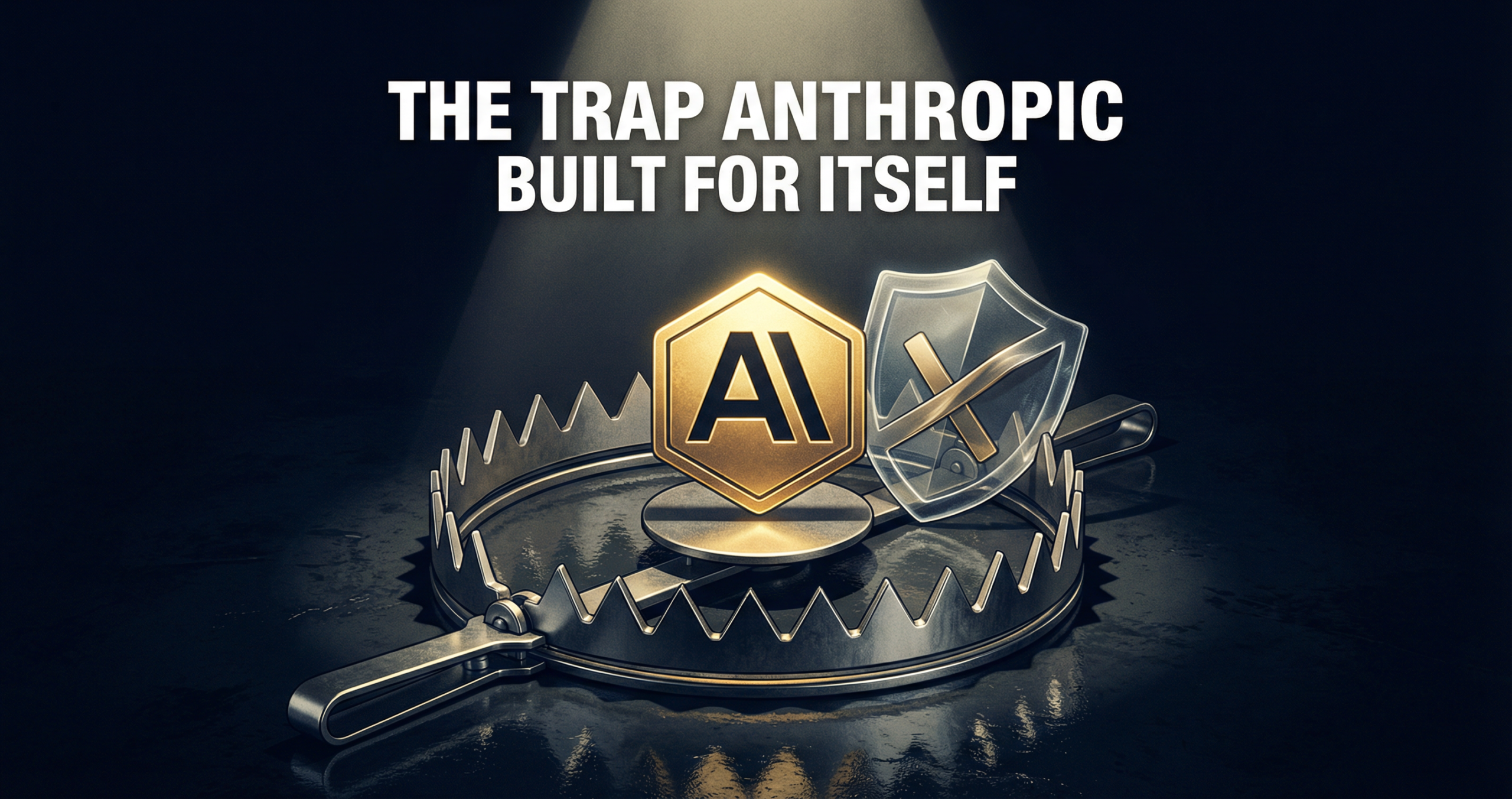
Anthropic was founded on a thesis that was both principled and commercially astute: that the AI industry needed a company willing to slow down and get safety right, and that enterprises and governments would pay a premium for AI that came with credible safety guarantees. The thesis drove Anthropic’s product decisions, its research priorities, its hiring, its public communications, and its regulatory relationships.
Thank you for reading this post, don't forget to subscribe!The trap embedded in this thesis is only now becoming fully visible. Safety positioning works as a competitive differentiator when the market rewards it. It becomes a liability when the market moves in a direction where safety constraints are framed as weaknesses, when competitor products are deployed in contexts Anthropic publicly refused, and when the company’s own commercial survival requires compromises that its founding narrative makes it uniquely difficult to communicate honestly.
What the Safety Brand Was Built to Do
Anthropic’s safety positioning served three distinct commercial functions when it was articulated most clearly. First, it created a talent acquisition advantage: researchers who left OpenAI over safety concerns, and academics who wanted to do serious alignment work, chose Anthropic over alternatives partly because the organizational culture matched their values. Safety branding attracted the specific talent profile that safety research requires.
Second, it created an enterprise sales advantage in regulated industries. Healthcare systems, financial institutions, law firms, and government agencies evaluating AI tools were, and to a degree still are, more willing to engage with a vendor whose public identity was built around responsible deployment than with competitors who prioritized capability demonstration over safety communication.
Third, it created a regulatory relationship advantage. Policymakers working on AI governance in Washington, Brussels, and London engaged with Anthropic as a good-faith interlocutor whose stated interests aligned with regulatory goals in ways that made productive conversation possible. This access is commercially valuable: companies that help write regulations have influence over those regulations that companies treated as adversaries do not.
The Positioning Equation: Anthropic’s safety brand was a real differentiator when it was rare. As every major AI company has adopted safety language, some with genuine commitment and some as reputational management, the differentiation value of safety positioning has compressed. Being the most credible safety-focused AI lab is less commercially distinctive when all AI labs claim to be safety-focused.
Where the Trap Closes
The Military Deployment Contradiction
Anthropic’s public position on military and defense applications of Claude was carefully constructed to draw a line between beneficial and harmful applications. The company prohibited direct use of Claude in weapons systems and lethal autonomous weapons while permitting use in administrative, logistics, and research contexts. This distinction was principled but practically difficult to enforce and commercially costly.
When the Pentagon relationship became public and defense-tech clients began distancing themselves from Anthropic in response, the safety brand’s double-edged nature became explicit. The clients who valued Anthropic’s safety positioning were uncomfortable with the military relationship. The defense clients who had been willing to work with Anthropic were deterred by the prohibition language. The company found itself losing customers on both sides of a line it had drawn.
The Capability Race Bind
Frontier AI development requires continuous investment in capability improvement to remain competitive with OpenAI, Google, and an accelerating field of well-funded competitors. Releasing less capable models in the name of safety would satisfy the safety brand promise at the cost of competitive position. Releasing the most capable models possible maximizes competitive position at the cost of some safety brand credibility.
Anthropic has navigated this tension by investing simultaneously in capability and safety research, arguing that the two are complementary rather than opposed. This argument is intellectually defensible and may be correct in the long run. In the short run, each major Claude release is evaluated by the market primarily on capability, and safety claims are taken as given rather than as verifiable differentiators by most enterprise buyers.
The Commercial Pressure on Research Priorities
Anthropic’s safety research division produces work that is genuinely influential in the alignment research community. Interpretability research, constitutional AI, and the responsible scaling policy framework represent real contributions to the field. But the company’s need for revenue to fund frontier model development creates pressure on research resource allocation that pure safety-focused funding structures would not impose.
The question that external observers increasingly ask is whether Anthropic’s safety research is shaped by what the company needs to believe about its own products in order to release them commercially, or by an independent assessment of what is actually safe. The answer matters enormously for the credibility of the safety brand, and it is not fully answerable from outside the organization.
How Other Companies Have Navigated Similar Traps
Patagonia’s environmental brand faced similar pressures when the realities of apparel supply chains conflicted with its positioning. The company’s response, investing significantly in supply chain improvement while being transparent about the gap between its ideals and its current practice, maintained brand credibility at the cost of some short-term commercial convenience. The parallel for Anthropic would be more explicit acknowledgment of where commercial pressure and safety ideals conflict, rather than positioning that implies the tensions do not exist.
IBM’s quality brand faced a similar trap when the PC era commoditized computing. IBM navigated it by explicitly repositioning from hardware quality to services expertise, a fundamental brand evolution rather than a defense of an increasingly untenable original positioning. Anthropic may need a similarly fundamental rethinking of what its safety identity means in a market that has absorbed its core message.
What an Escape Looks Like
- Radical transparency about safety tradeoffs: Publishing specific, verifiable claims about what Claude can and cannot do safely, rather than general safety positioning that cannot be independently evaluated
- Specialization by use case: Building the most demonstrably safe AI for specific high-stakes categories like healthcare and legal, rather than claiming general safety superiority across all domains
- Independent safety verification: Supporting third-party auditing of safety claims rather than relying on self-assessment, which would give the safety brand the external credibility it currently lacks
- Honest communication about the military question: A clear, specific policy with explicit acknowledgment of the commercial consequences rather than a position that attempts to satisfy incompatible constituencies
Bottom Line: The trap Anthropic built is the trap every principled company builds when it uses its principles as a marketing differentiator: the principles become subject to commercial pressure, and compromises that would be unremarkable for a company without principle-based positioning become credibility crises. Escaping it requires more honesty about the tensions, not less.
Related: Anthropic Pentagon Blacklist | Why Top Talent Is Leaving OpenAI and xAI | AI Culture Wars Explained
Anthropic responsible scaling policy
Related Posts

Stay Informed With the Latest & Most Important News

Top News
- Google’s AI-Powered Workspace in Search Is Now Available to All US Users: Here Is What Actually Changed
- How Jeffrey Epstein Used Silicon Valley’s Network: What the Reporting on Reid Hoffman and Tech’s Elite Reveals
- Where to Preorder the iPhone 17E Right Now: Every Deal Ranked Before the March 11 Launch

- Google Apps Experience and Games Level Up: The Programs That Could Cut Your Play Store Commission Significantly
- Google Is Not Waiting for a Settlement: It Just Killed the 30 Percent App Store Fee Unilaterally









Advertisement