

Now Reading: The Government Hacking Tools Targeting Your iPhone Are Now in Criminal Hands
-
01
The Government Hacking Tools Targeting Your iPhone Are Now in Criminal Hands
The Government Hacking Tools Targeting Your iPhone Are Now in Criminal Hands

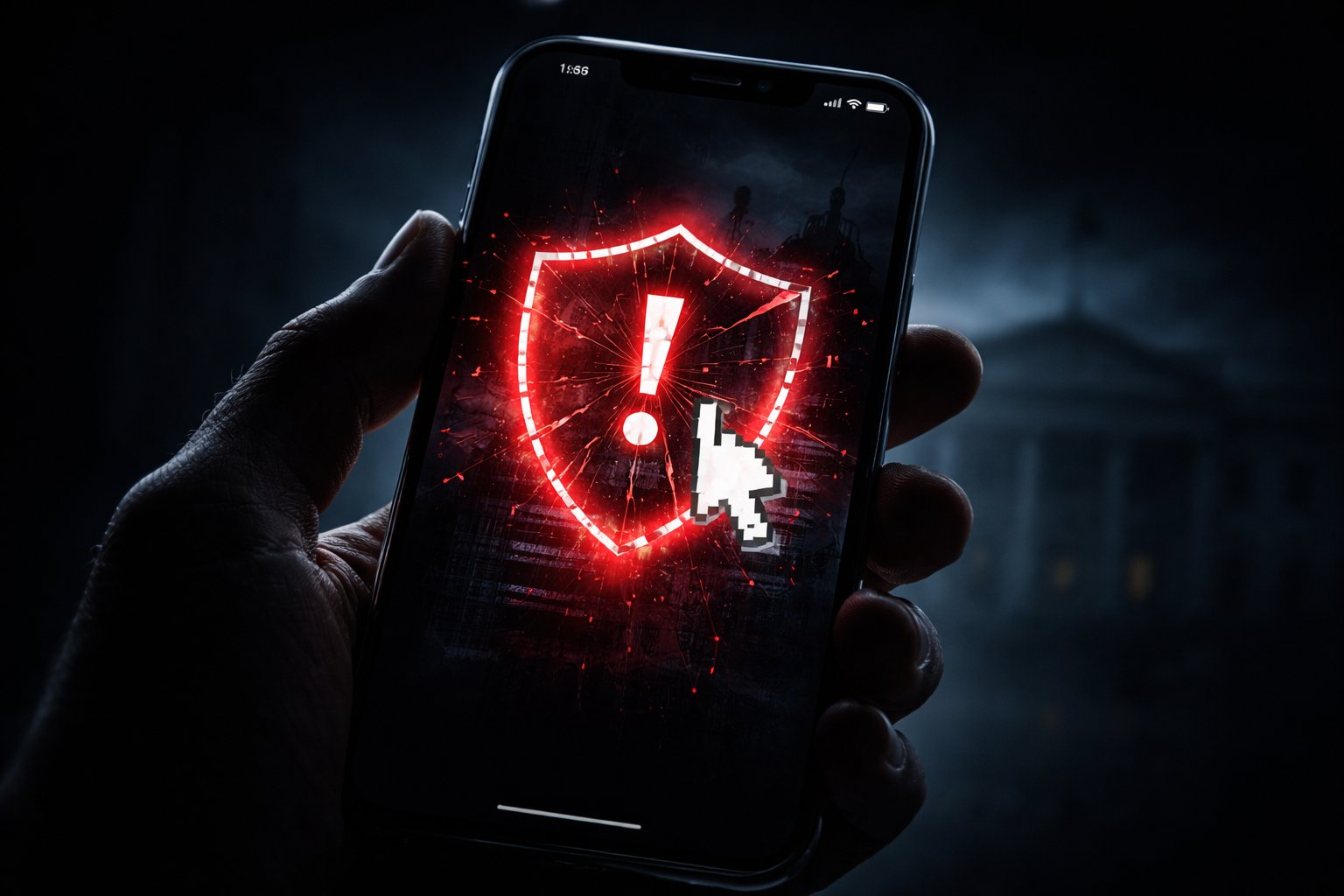
For most of their operational life, the most sophisticated mobile device exploits in existence lived in a tightly controlled world: intelligence agencies, defense contractors, and governments. The tools were expensive, closely guarded, and their use was ostensibly limited to national security targets. That world has fundamentally changed.
Thank you for reading this post, don't forget to subscribe!A suite of government-grade hacking tools originally developed to target iPhones has now been adopted and adapted by cybercriminal groups. The migration from nation-state espionage tool to criminal malware is a pattern that security researchers have documented before, but the speed and scale at which it is occurring with iOS-targeting exploits is alarming even by the standards of the threat intelligence community.
What Are These Tools and Where Did They Come From?
The hacking tools at the center of this story were developed by or for government intelligence and law enforcement agencies seeking to access iPhones belonging to suspects, adversaries, and surveillance targets. Apple’s iOS security architecture is widely regarded as among the most robust in consumer devices, which created a market for specialized exploits that can bypass its protections.
Companies like the NSO Group (maker of Pegasus spyware) built commercial exploit businesses catering to government clients. The tools they and others developed exploit zero-day vulnerabilities, security flaws unknown to Apple and therefore unpatched, to gain access to device data, microphones, cameras, and communications without any interaction from the target user.
Zero-Day Exploits Explained: A zero-day vulnerability is a security flaw that the software maker does not know about yet. There is therefore zero days of protection available. Zero-days targeting iPhone can be worth millions of dollars on the exploit market because they work against unpatched devices, which is virtually every device in use.
How Government Tools Reach Criminal Groups
The pathway from government hacking tool to criminal malware follows several documented routes. Former employees of intelligence agencies and defense contractors carry institutional knowledge and sometimes code when they transition to other roles. Criminal organizations with sufficient resources can purchase exploit code on underground markets where disgruntled contractors or ideologically motivated insiders sell or leak capabilities.
In some cases, the tools themselves are not copied but the techniques are reverse-engineered after security researchers analyze malware caught in the wild and publish their findings. A technique documented in a threat intelligence report becomes a blueprint for criminal developers who can implement similar capabilities with sufficient resources and time.
The NSO Group Precedent
The NSO Group’s Pegasus spyware was perhaps the most notorious example of government-grade mobile surveillance technology. After extensive investigative reporting revealed Pegasus being used against journalists, activists, and opposition politicians well beyond its stated anti-terrorism mandate, the US government blacklisted NSO Group in 2021.
The aftermath of that episode, including lawsuits, company restructuring, and increased scrutiny of the commercial spyware industry, did not eliminate the underlying technology. It distributed it. Researchers and criminal groups who had tracked Pegasus’s development closely built on what they learned.
What These Tools Can Do to an iPhone
- Access encrypted messages including iMessage, WhatsApp, and Signal without breaking encryption (they access the decrypted data on the device)
- Activate the microphone and camera without triggering any visible indicator to the user
- Extract location history, contacts, photos, and app data
- Install persistent malware that survives device restarts
- Operate silently with minimal battery impact to avoid detection
- In the most advanced cases, achieve zero-click installation requiring no user action
The zero-click capability is the most alarming feature. Traditional malware requires a user to click a link, download a file, or otherwise take an action that initiates infection. Zero-click exploits can compromise a device through nothing more than a received iMessage or missed FaceTime call.
How Apple Responds to These Threats
Apple takes mobile security seriously and has dedicated security teams actively hunting for vulnerabilities in iOS. The company’s Lockdown Mode, introduced in iOS 16, provides an extreme security option that disables significant functionality in exchange for dramatically reduced attack surface. Lockdown Mode is specifically designed for journalists, activists, politicians, and others who believe they may be targeted by sophisticated nation-state or criminal actors.
Apple also maintains a Security Research Device Program and pays substantial bounties for reported vulnerabilities. A zero-day capable of remote code execution on a current iPhone is worth up to $2 million through Apple’s official bug bounty, which is a deliberate attempt to make responsible disclosure more financially attractive than selling to exploit brokers.
iOS Security Updates: Why Prompt Installation Matters More Than Ever
When Apple releases an iOS security update, it typically includes patches for vulnerabilities that are being actively exploited in the wild. The window between public disclosure of a vulnerability and widespread patching is when the most attacks occur. Devices that delay updating remain vulnerable to known exploits.
The migration of government-grade tools to criminal groups makes the previously low-risk assumption, that ordinary individuals are not worth targeting with sophisticated exploits, less reliable. Criminal groups with access to powerful tools may use them for financial theft, ransomware, and fraud targeting individuals who would never have appeared on a nation-state’s target list.
What iPhone Users Should Do Right Now
- Update to the latest iOS version immediately. If you are not on the current iOS release, update today.
- Enable Lockdown Mode if you are a journalist, activist, attorney, or anyone handling sensitive information
- Review which apps have microphone and camera access in Settings and revoke anything unnecessary
- Use iMessage and FaceTime only with trusted contacts, and be cautious of unexpected messages from unknown numbers
- Enable Advanced Data Protection in iCloud to end-to-end encrypt your iCloud backup
- Consider whether your threat model warrants a mobile device security audit
Bottom Line: Government-grade iPhone hacking tools in criminal hands represent a qualitative escalation in the mobile threat landscape. The most effective defense remains prompt software updates, minimal app permissions, and Lockdown Mode for high-risk individuals. This is not paranoia. It is risk management.
Related: LeakBase Hacking Forum Shutdown | Smart Glasses Privacy Alert App | Fig Security Raises $38M
Apple security research and updates
Stay Informed With the Latest & Most Important News


Top News
- Google’s AI-Powered Workspace in Search Is Now Available to All US Users: Here Is What Actually Changed

- How Jeffrey Epstein Used Silicon Valley’s Network: What the Reporting on Reid Hoffman and Tech’s Elite Reveals
- Where to Preorder the iPhone 17E Right Now: Every Deal Ranked Before the March 11 Launch
- Google Apps Experience and Games Level Up: The Programs That Could Cut Your Play Store Commission Significantly

- Google Is Not Waiting for a Settlement: It Just Killed the 30 Percent App Store Fee Unilaterally









Advertisement