

Now Reading: I Charge My Phone on a Racing Car. Here Is Why It Is One of the Best Technology Decisions I Have Made
-
01
I Charge My Phone on a Racing Car. Here Is Why It Is One of the Best Technology Decisions I Have Made
I Charge My Phone on a Racing Car. Here Is Why It Is One of the Best Technology Decisions I Have Made

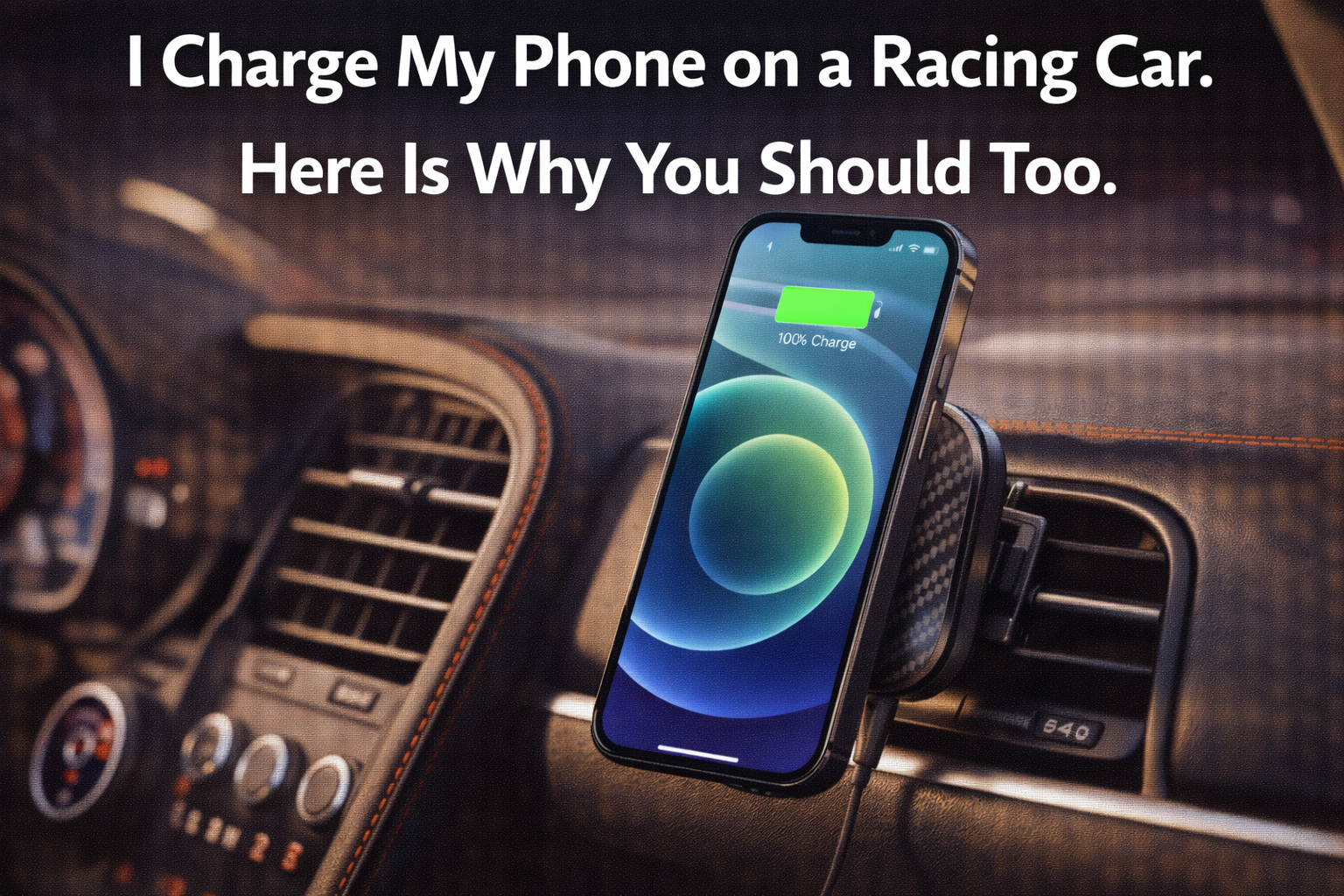
The phone charger in your car is probably fine. It probably does the job. If you have a newer car, there might be a wireless charging pad somewhere in the center console that leaves your phone warm, charges at half speed, and requires you to remember to actually place the phone on it rather than just reaching for it by habit.
Thank you for reading this post, don't forget to subscribe!My phone charging setup involves a mounting system inspired by the type used in racing driver aids: a magnetic cradle that clamps to the dashboard with a mechanism designed for the kind of vibration and shock that race environments create, charges via MagSafe at the full 15W rate, and positions the phone precisely where navigation display, hands-free calls, and music controls need it to be. It is genuinely better than every other car charging arrangement I have tried, and explaining why leads to a broader conversation about how car-phone integration has quietly become one of the most important everyday technology experiences.
Why Car Charging Is More Important Than It Sounds
The average American spends approximately 51 minutes per day in a car. For people with longer commutes or who drive professionally, that number is substantially higher. This driving time has become one of the primary consumption contexts for audio content, navigation, and communication, all of which are handled by smartphones that are simultaneously being drained by these use cases.
The combination of navigation with display-on, Bluetooth audio streaming, and cellular data for real-time traffic creates a power draw that can exceed some car charging solutions’ output. A car that charges your phone more slowly than it drains represents a net negative charging arrangement, which defeats the purpose of having a charger at all.
The MagSafe Standard Changes Everything
Apple’s MagSafe standard, beyond being a charging mechanism, is a positioning system. The magnets that align your phone with the charging coil also align it with every mount designed around the MagSafe standard, creating a snap-in, snap-out interaction that is faster and more satisfying than any friction-based mount. For car use, where you are placing and removing your phone while getting in and out of the vehicle, this interaction speed matters more than it does in a static desk setup.
The ecosystem of MagSafe-compatible car mounts has expanded dramatically since the standard’s introduction, ranging from minimalist vent clips to the elaborate dashboard mounting systems inspired by motorsport applications. The racing-derived mount I use is at the elaborate end of this spectrum, but even the simplest MagSafe vent mount represents a significant improvement in the car charging and mounting experience over the friction grip alternatives it replaces.
The 15W Difference: Standard car wireless chargers deliver 5W to 7.5W. MagSafe car chargers deliver 15W when connected to a sufficiently powerful USB-C power adapter. At 15W input, an iPhone with navigation and audio streaming active will charge, not merely maintain, its battery during most driving sessions. The output difference is what separates a genuine car charger from a drain management device.
What Makes a Racing-Inspired Mount Worth Considering
The specific category of car phone mounts marketed with motorsport-derived designs earns that positioning through several practical engineering choices. The clamping mechanisms are typically over-engineered for street use, which means they survive the dashboard vibration, temperature cycling, and occasional hard braking that causes lower-quality mounts to loosen, crack, or fail over months of daily use.
The mounting base designs in this category also tend to be optimized for one-handed operation, a requirement in the race environment that translates directly to the street driving context where you are placing and removing your phone while managing other tasks. The snap-in angles and release mechanisms are designed for reliable operation under less-than-ideal conditions.
The Setup That Works
The specific combination that has worked best: a MagSafe-compatible mount from the motorsport accessories category, a high-output USB-C power adapter that supplies the 20W or more needed to reliably deliver 15W to the phone after cable and adapter losses, and a USB-C cable rated for high-current delivery. The total cost of this setup is under $120 and is significantly cheaper than most cars’ optional wireless charging options at the configuration price.
Android Users and the Comparable Setup
The MagSafe ecosystem is iPhone-specific, but Android users have access to equivalent solutions through the Qi2 standard, which implements the same magnetic alignment approach as MagSafe and delivers comparable charging speeds with compatible Android devices. Qi2 car mounts and compatible Samsung, Google Pixel, and other Android flagships produce a similar snap-in, high-speed wireless charging experience to MagSafe.
For Android devices without Qi2 compatibility, the fastest car charging option remains wired USB-C, and the ergonomics of the mount matter more than the charging mechanism. A well-positioned wired mount beats a poorly positioned wireless pad on every practical dimension except the connection-free convenience of wireless.
The Navigation Integration Argument
The argument for a properly positioned phone mount that goes beyond charging is the navigation integration it enables. A phone mounted at the correct eyeline height for glance-based navigation reduces the time your eyes leave the road compared to a phone in a cupholder or center console, and the precision of MagSafe snap-in positioning means the mount can be calibrated once to a perfect viewing angle and will replicate that angle every time the phone is placed.
Bottom Line: Charging your phone on a racing-derived MagSafe mount is not an enthusiast affectation. It is a practical upgrade to one of the most important technology interactions in your daily life. The combination of 15W charging speed, reliable mounting, and one-handed snap-in operation makes it the best phone-in-car experience available at any price. If your current car charging situation involves a warm phone that ends your drive at the same battery percentage it started, this is the upgrade worth making.
Related: Kobo Remote Best Gadget | Keychron Foldable Keyboard | Aqara U400 Smart Lock Review
Stay Informed With the Latest & Most Important News



Top News
- Google’s AI-Powered Workspace in Search Is Now Available to All US Users: Here Is What Actually Changed

- How Jeffrey Epstein Used Silicon Valley’s Network: What the Reporting on Reid Hoffman and Tech’s Elite Reveals

- Where to Preorder the iPhone 17E Right Now: Every Deal Ranked Before the March 11 Launch
- Google Apps Experience and Games Level Up: The Programs That Could Cut Your Play Store Commission Significantly

- Google Is Not Waiting for a Settlement: It Just Killed the 30 Percent App Store Fee Unilaterally











Advertisement