

Now Reading: How MLB Can Make Baseball Relevant on a Fast-Changing Internet: The Strategy the League Needs Now
-
01
How MLB Can Make Baseball Relevant on a Fast-Changing Internet: The Strategy the League Needs Now
How MLB Can Make Baseball Relevant on a Fast-Changing Internet: The Strategy the League Needs Now

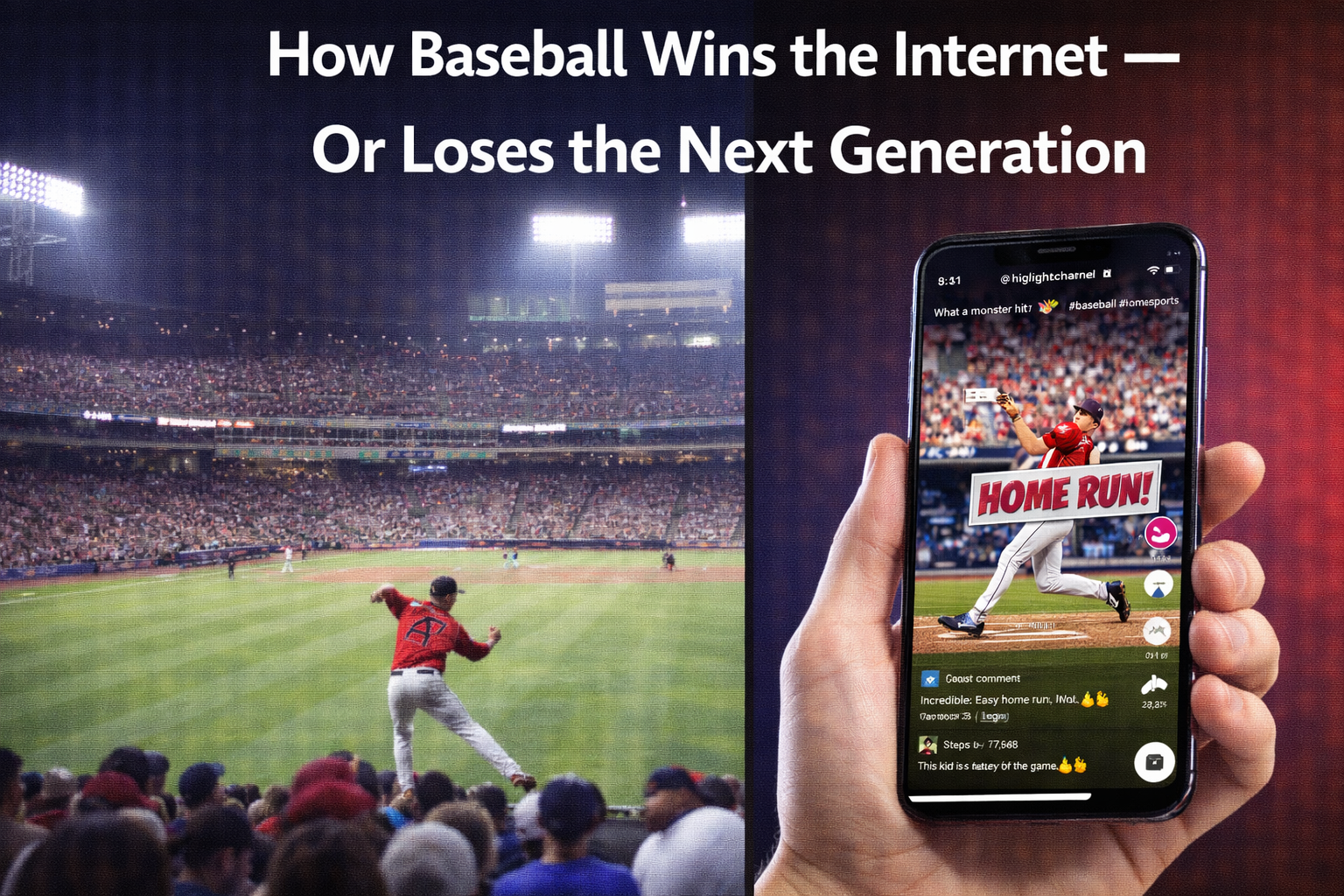
Baseball has a younger audience problem that cannot be wished away with better broadcasting deals. The sport whose postseason once commanded the entire nation’s attention now competes with short-form video, esports, NBA social content, and an entertainment ecosystem that was not designed for three-hour games with significant dead time between bursts of action.
Thank you for reading this post, don't forget to subscribe!The good news is that baseball’s underlying content is not the problem. The sport generates extraordinary individual moments, genuinely compelling statistics, dramatic narratives, and some of the most photogenic athletes in professional sports. The distribution strategy that packages those elements is where baseball is losing, and distribution strategy is fixable in ways that the pace of play is not.
The Attention Economy Problem Baseball Has Not Solved
The average MLB game runs three hours. The average TikTok session runs somewhere between six and eleven minutes. The average YouTube video that retains viewers through to completion runs between seven and fifteen minutes. The mismatch between baseball’s native format and the consumption patterns of the audiences it needs to develop is not merely a marketing challenge. It is a product format challenge that requires baseball to think of itself as a content creator, not just a live sports broadcaster.
The NFL has managed this transition more effectively than any other major US sport, partly by accident and partly by design. Football’s natural pause structure, the huddle between plays, lends itself to the kind of bite-sized drama and analysis that social video requires. The wait between pitches in baseball, while increasing under the pitch clock reforms that have genuinely improved pace, is still less naturally dramatic than the pre-snap build in football.
What the Numbers Actually Show
MLB’s core viewership metrics, while down from peak years, tell a more nuanced story than the doom narratives suggest. Attendance has been relatively stable. The playoff viewership numbers, while below NFL equivalents, are not in freefall. The problem is not that baseball is dying. The problem is that baseball’s audience is aging faster than new younger fans are being recruited, and the sport’s digital and social presence has not compensated for the slower organic recruitment that a three-hour game produces.
The Average Fan Age Problem: The average MLB fan age is approximately 57, the highest of any major North American professional sport. The NBA’s average fan age is in the low forties. The NFL’s is in the mid-forties. This demographic gap is not fatal, older fans spend more money on attendance and merchandise, but it signals a recruitment failure that will compound over time if not addressed.
What MLB Must Do Differently
Short-Form Native Content, Not Highlights
The difference between a highlight package and short-form native content is the difference between repurposing existing footage and creating content designed for the platform. MLB’s highlight packages on YouTube and social media are competently produced but feel like television content cut for a different format. Native short-form content for TikTok and Instagram Reels is built around the platform’s discovery mechanics, sound design, creator culture, and the specific type of entertainment that the platform’s algorithm rewards.
The teams and players who have successfully built young audiences on social platforms have done it by producing content that does not look like MLB marketing material. Dugout footage, behind-the-scenes player moments, statistical storytelling with motion graphics, and fan interaction content all outperform traditional highlight packages on short-form platforms. MLB’s league-level and team-level social strategies need to produce more of this and less of the television-format content that performs poorly in algorithmic discovery.
Player Personality Platforms
The NBA’s dominance of sports social media is substantially driven by its players’ individual social media presences. LeBron James, Steph Curry, and younger stars have built platforms that extend beyond their basketball performance and give fans a reason to follow the players as personalities, not just athletes. Baseball has players with compelling personalities who are systematically underexposed as social media figures because MLB’s cultural approach to player promotion has historically been more conservative than the NBA’s.
Shohei Ohtani’s global following demonstrated that baseball can generate superstar-level social engagement when the player’s story is genuinely remarkable and when the league’s platforms support the narrative rather than confining it to official channels. The Ohtani model needs to be democratized: more players with distinct personalities, specific narratives, and genuine social media presences that fans can follow independently of game attendance.
Statistical Storytelling for the Algorithm
Baseball’s statistical richness is an asset that no other sport can match for content creation purposes. Statcast data, advanced metrics, and the depth of baseball’s historical record create a content library that is genuinely inexhaustible for analytically inclined audiences. The problem is that this content is primarily being consumed by the already-converted fan base rather than being used to recruit new fans.
Short-form statistical storytelling, formatted for social discovery with motion graphics, surprising comparisons, and accessible explanations of what the numbers reveal, is one of baseball’s strongest opportunities in the attention economy. The audience for this content already exists on TikTok and YouTube. It is currently being served by independent creators rather than by MLB’s own content infrastructure.
The Streaming Strategy Reckoning
MLB’s streaming rights situation has been complicated by the regional sports network collapse, which severed many fans’ ability to watch their local team without a cable subscription. The league’s response to this infrastructure crisis has been uneven, with some teams launching direct-to-consumer streaming options and the league-wide MLB.TV product remaining the most comprehensive but least user-friendly option for new fans.
The streaming opportunity for baseball is not to compete with Netflix on entertainment value. It is to become the essential subscription for a specific audience that is passionate enough about the sport to pay for access. Delivering that product requires resolving the blackout restrictions that make MLB.TV unavailable for fans trying to watch their own local team, which has been the single most criticized aspect of baseball’s streaming approach for years.
Bottom Line: Baseball has better raw material for digital content success than its social media performance suggests. The gap between content quality and distribution effectiveness is where the league is losing younger audiences. Short-form native content, player personality platforms, statistical storytelling, and a streaming product that removes the blackout barrier are the specific interventions that could change baseball’s digital trajectory. The sport is not too slow for the internet. The league has been too slow to adapt to it.
Related: Netflix Warner Bros Deal Collapse | Live Nation Billie Eilish Venue | How MLB Streaming Rights Work
Stay Informed With the Latest & Most Important News

Top News
- Google’s AI-Powered Workspace in Search Is Now Available to All US Users: Here Is What Actually Changed
- How Jeffrey Epstein Used Silicon Valley’s Network: What the Reporting on Reid Hoffman and Tech’s Elite Reveals
- Where to Preorder the iPhone 17E Right Now: Every Deal Ranked Before the March 11 Launch
- Google Apps Experience and Games Level Up: The Programs That Could Cut Your Play Store Commission Significantly
- Google Is Not Waiting for a Settlement: It Just Killed the 30 Percent App Store Fee Unilaterally








Advertisement