

Now Reading: Google Is Not Waiting for a Settlement: It Just Killed the 30 Percent App Store Fee Unilaterally
-
01
Google Is Not Waiting for a Settlement: It Just Killed the 30 Percent App Store Fee Unilaterally
Google Is Not Waiting for a Settlement: It Just Killed the 30 Percent App Store Fee Unilaterally

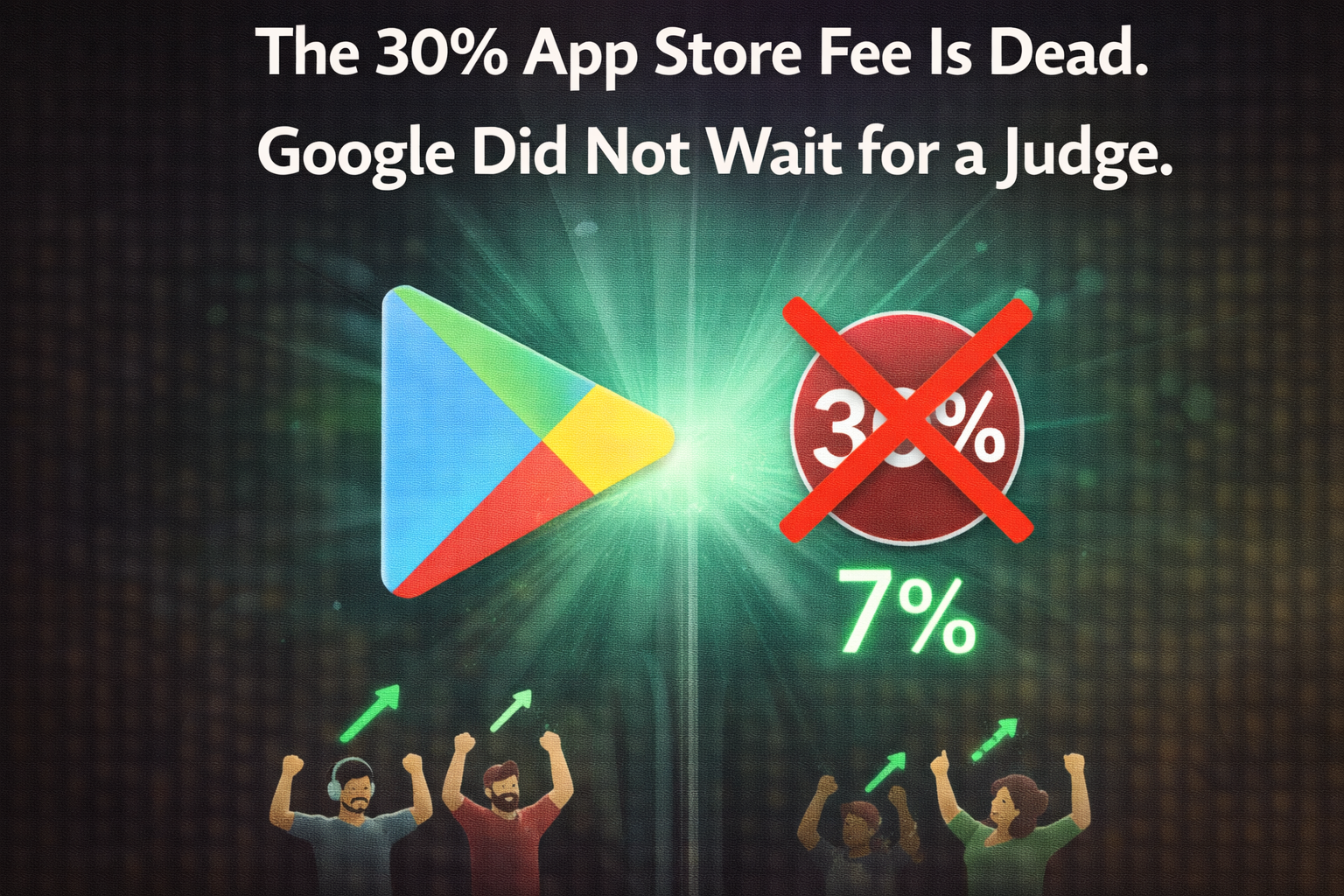
The 30 percent app store commission, a figure that became one of the most contested numbers in technology regulation, has effectively ended as the default fee on the Google Play Store. In a move that predates any final court-ordered remedy from the Epic antitrust case, Google has announced changes to its Play Store fee structure that reduce the standard commission for a majority of transactions on the platform.
Thank you for reading this post, don't forget to subscribe!The decision to move ahead of a court order is significant. It signals that Google has concluded that defending the 30 percent standard is no longer commercially or politically viable, and that getting ahead of a court-imposed remedy with a voluntary reduction is preferable to having a specific restructuring imposed through litigation. Understanding what the new fee structure actually looks like, and who benefits from it, requires looking past the headline numbers.
What the Old 30 Percent Fee Was and Why It Mattered
Google’s standard 30 percent commission applied to all in-app purchases made through the Google Play billing system, including subscriptions, digital goods, and premium app downloads. For developers generating significant in-app purchase revenue, this commission represented an enormous effective tax on their business that had no equivalent in physical retail or most other distribution channels.
The 30 percent standard was not Google’s invention. Apple established it as the app store norm when it launched the App Store in 2008, and Google adopted the same rate when Play Store commerce launched. The rate was defended by both companies as reflecting the value of platform distribution, security review, payment processing, and the customer relationship infrastructure that app stores provide.
The counter-argument, made most forcefully by Epic Games but widely shared among developers, was that 30 percent was a monopoly rent extracted through coercive market structure rather than competitive pricing that reflected the actual cost and value of distribution services. The antitrust verdict against Google affirmed that this argument had legal merit.
What the New Fee Structure Looks Like
Google’s new fee structure creates tiered commission rates that vary by developer size, category, and program participation. The headline changes include a reduced standard rate for apps in specific categories including news and books, a 15 percent rate for the first one million dollars of annual developer revenue per app, and the continuation of reduced rates for subscription products after the first year.
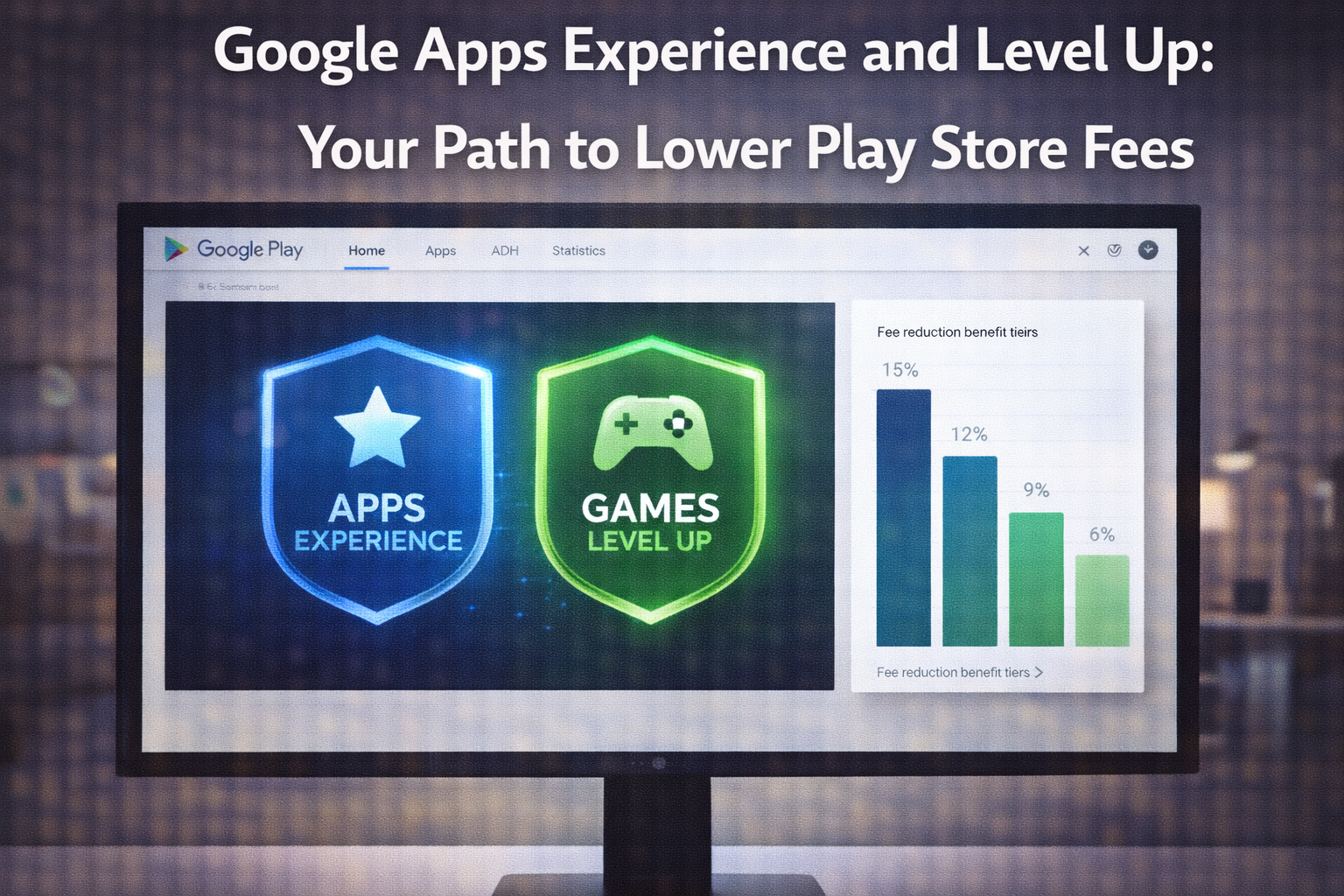
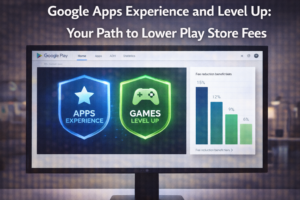
The Apps Experience and Games Level Up programs, which Google has described in detail, create additional fee reduction pathways for developers who meet specific quality, engagement, and distribution criteria. These programs allow qualifying developers to negotiate commission rates significantly below the standard tiers in exchange for commitments around content quality, user experience standards, and minimum content investment.
The Real Beneficiaries: The 15 percent rate on the first million dollars of revenue primarily benefits smaller developers, for whom the rate reduction is meaningful but whose total contribution to Google’s Play Store revenue is limited. Large developers, whose aggregate in-app purchase volumes drive the majority of Play Store commerce, negotiate individual rates through direct agreements rather than through the standard tier structure. The public fee reduction is most visible at the small developer end of the market.
What Developers Actually Pay Now
Standard apps and games: Reduced from 30% with tiered rates based on revenue scale and program participation.
Subscriptions after year one: 15%, reduced from 15% that was already in place before this change.
Small business programs (under $1M annual revenue): 15% baseline with further reduction potential through program participation.
Apps Experience qualifying apps: Negotiated rates below standard tiers, category-specific.
Games Level Up qualifying games: Negotiated rates for games meeting engagement and content quality criteria.
How This Compares to Apple’s App Store
Apple has made parallel moves on App Store fee structure under regulatory pressure, with similar 15 percent small developer rates and negotiated structures for large developers. The convergence of Apple and Google fee structures toward similar tiers is not coincidental: both companies are responding to the same regulatory and antitrust environment and are making similar calculations about what fee structure is defensible.
The practical consequence is that the 30 percent standard that was industry-defining for fifteen years is effectively over for the majority of developer-platform relationships, even if individual developer agreements vary widely from the published tiers.
What This Means for Users
Lower app store fees do not directly translate to lower app prices, because the relationship between developer costs and consumer pricing is mediated by market competition and the developers’ pricing strategies. The most likely consumer benefit is indirect: developers who retain more revenue have more resources to invest in product improvement, and the reduced extraction of revenue from app ecosystems may support more sustainable independent developer businesses.
Bottom Line: Google killing the 30 percent default without a court order is a strategic concession that acknowledges the antitrust environment has made the old commission structure untenable. The new tiered structure is more complex and more developer-friendly than the flat 30 percent it replaces, while preserving Google’s ability to negotiate higher rates with large developers who have the least leverage. The era of the uniform 30 percent app store tax is over.
Related: Tim Sweeney Cannot Criticize Google | Fortnite Returns to Google Play | Epic Google Metaverse Deal
Google Play developer fee schedule
Related Posts


Stay Informed With the Latest & Most Important News


Top News
- Google’s AI-Powered Workspace in Search Is Now Available to All US Users: Here Is What Actually Changed
- How Jeffrey Epstein Used Silicon Valley’s Network: What the Reporting on Reid Hoffman and Tech’s Elite Reveals
- Where to Preorder the iPhone 17E Right Now: Every Deal Ranked Before the March 11 Launch
- Google Apps Experience and Games Level Up: The Programs That Could Cut Your Play Store Commission Significantly
- Google Is Not Waiting for a Settlement: It Just Killed the 30 Percent App Store Fee Unilaterally













Advertisement