

Now Reading: Fortnite Is Back on Google Play Store: How to Download It and What This Moment Actually Means
-
01
Fortnite Is Back on Google Play Store: How to Download It and What This Moment Actually Means
Fortnite Is Back on Google Play Store: How to Download It and What This Moment Actually Means

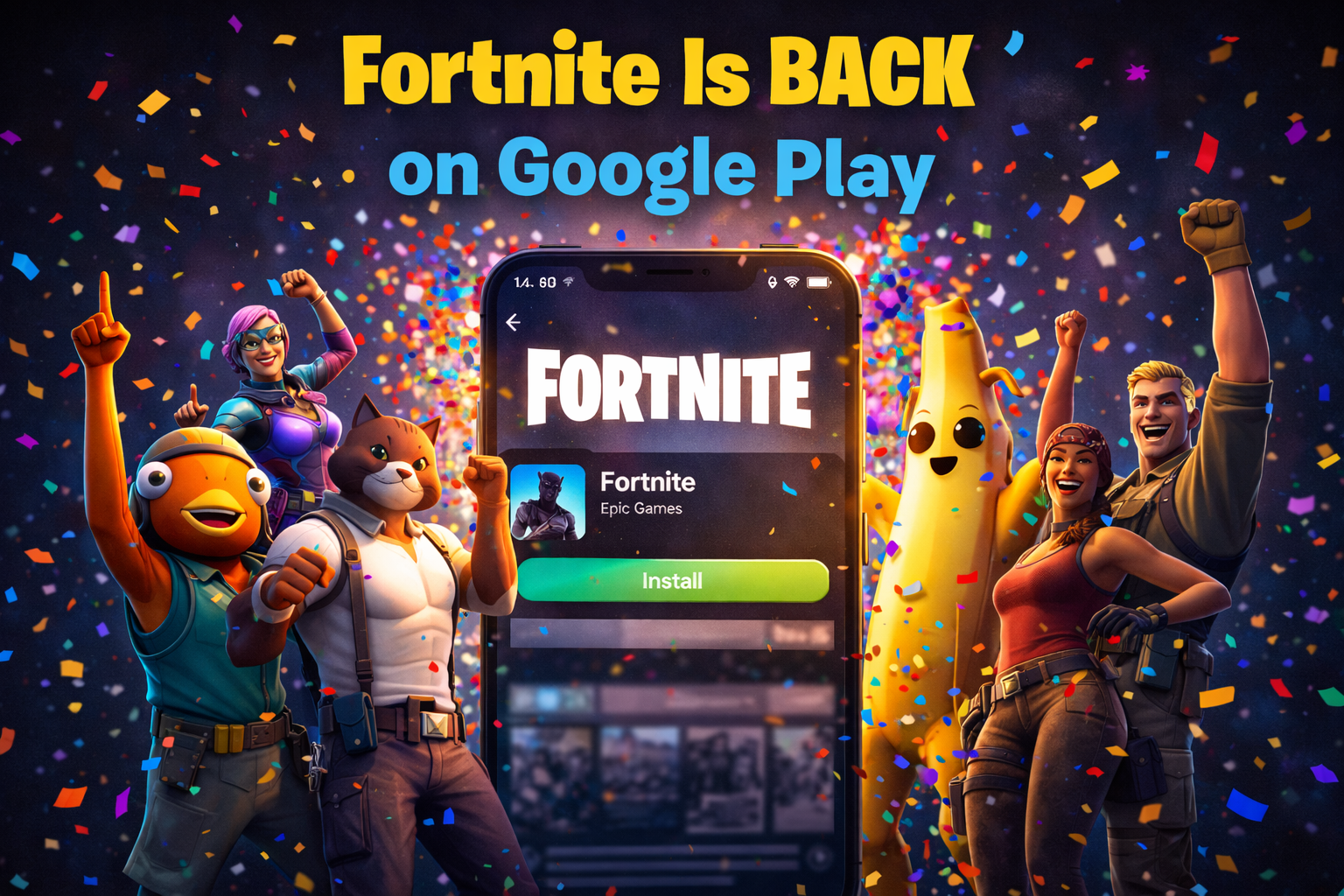
For four years, Android users who wanted to play Fortnite faced a choice that no one should have to make with a free-to-play game: install it through Epic’s own launcher with the associated friction and security warnings that sideloading triggers, or simply not play on Android. That era is over. Fortnite is back on Google Play globally, and the return is more than a convenient update for Android gamers.
Thank you for reading this post, don't forget to subscribe!The return is the visible result of Epic’s antitrust battle against Google, which produced both a landmark verdict and a settlement that, among other provisions, cleared the path for Fortnite to re-enter the Play Store ecosystem. Here is what happened, how to get back in the game, and what the broader significance is.
What Happened: The Four-Year Absence Explained
Epic removed Fortnite from the Google Play Store in August 2020, deliberately violating Play Store policy by implementing its own direct payment system that bypassed Google’s in-app purchase mechanism and the 30 percent commission Google charges on those transactions. Epic simultaneously did the same on iOS, triggering Apple’s removal of Fortnite from the App Store and launching the twin antitrust cases that defined the next four years.
The strategy was deliberate: Epic wanted to create a legal case against both platforms’ commission structures and chose the nuclear option of violating the rules explicitly to manufacture a clean legal dispute. On Android, the antitrust jury ultimately agreed with Epic’s core argument that Google had illegally maintained its monopoly. On iOS, the court sided with Apple.
What Changed to Allow the Return
The settlement between Epic and Google that followed the antitrust verdict included provisions that allowed Fortnite to return to the Play Store under modified terms: a reduced commission rate on Epic’s transactions, improved access for Epic’s own store within the Android ecosystem, and the legal resolution of the underlying dispute that had prevented the return.
The return is conditional on Epic’s compliance with Play Store policies going forward, including the payment processing requirements that it deliberately violated in 2020. The difference now is that the commission rate is lower and the legal framework governing how Google can enforce its policies is shaped by the antitrust verdict’s findings.
How to Download Fortnite on Android Right Now
- Open the Google Play Store on your Android device.
- Search for ‘Fortnite’ in the Play Store search bar.
- Select the official Epic Games Fortnite listing and tap Install.
- If you previously installed Fortnite through Epic’s launcher, the Play Store version will coexist or you can remove the sideloaded version.
- Log in with your existing Epic Games account to access all previously purchased cosmetics and your progression.
Account Continuity: All Fortnite purchases, V-Bucks, cosmetics, and progression are tied to your Epic Games account rather than to any specific device or platform. Switching from the sideloaded Android version to the Play Store version, or playing across Android, iOS, PC, and console, uses the same account and preserves all purchases.
What This Means for Android Gamers
The practical improvement for Android Fortnite players is significant. The sideloaded installation path that had been the only option since 2020 created real barriers: Android’s default settings treat sideloaded apps with security warnings, the installation process required multiple settings changes, and automatic updates did not work as smoothly as Play Store installations.
Play Store installation restores the standard Android app experience: one-tap installation, automatic updates, Play Protect security scanning, and the confidence that comes with installing through the official channel rather than a direct download from a developer’s website.
The Competitive Implications for App Store Reform
Fortnite’s return to Google Play is a positive development for Android gamers, but its significance for the broader app store competition debate is nuanced. Epic’s legal victory demonstrated that Google’s monopolistic behavior in Android app distribution was legally actionable under US antitrust law. The settlement produced specific relief for Epic and some structural improvements in the Android ecosystem.
What the outcome did not produce is fundamental structural change in how Google operates the Play Store for the thousands of developers who are not Epic. The commission reductions are specific to Epic’s situation. The behavioral requirements on Google are real but limited. The underlying dynamics that concentrated power in Google’s hands over Android app distribution remain largely intact.
- Developers with more than one million downloads can apply for reduced commission programs Epic’s legal action helped expand
- Third-party app stores have somewhat improved access to Android users following the settlement requirements
- Epic’s own Epic Games Store on Android can operate with less friction than before the verdict
- The 30 percent default commission for most developers remains in place
Bottom Line: Fortnite’s return to Google Play is a win for Android players and a visible marker of Epic’s antitrust victory over Google. Download it through the Play Store now and enjoy a dramatically smoother Android gaming experience than the sideloaded alternative provided. The bigger battle for app store reform continues in regulatory and legislative venues where Epic’s legal precedent is now a useful tool.
Related: Tim Sweeney Can’t Criticize Google Until 2032 | Google Play Store Fee Reduction | Xbox in Danger
Related Posts
Stay Informed With the Latest & Most Important News


Top News
- Google’s AI-Powered Workspace in Search Is Now Available to All US Users: Here Is What Actually Changed
- How Jeffrey Epstein Used Silicon Valley’s Network: What the Reporting on Reid Hoffman and Tech’s Elite Reveals

- Where to Preorder the iPhone 17E Right Now: Every Deal Ranked Before the March 11 Launch
- Google Apps Experience and Games Level Up: The Programs That Could Cut Your Play Store Commission Significantly
- Google Is Not Waiting for a Settlement: It Just Killed the 30 Percent App Store Fee Unilaterally












Advertisement