

Now Reading: Einride Raises $113 Million Ahead of Going Public: Why This Self-Driving Truck Company Is One to Watch
-
01
Einride Raises $113 Million Ahead of Going Public: Why This Self-Driving Truck Company Is One to Watch
Einride Raises $113 Million Ahead of Going Public: Why This Self-Driving Truck Company Is One to Watch

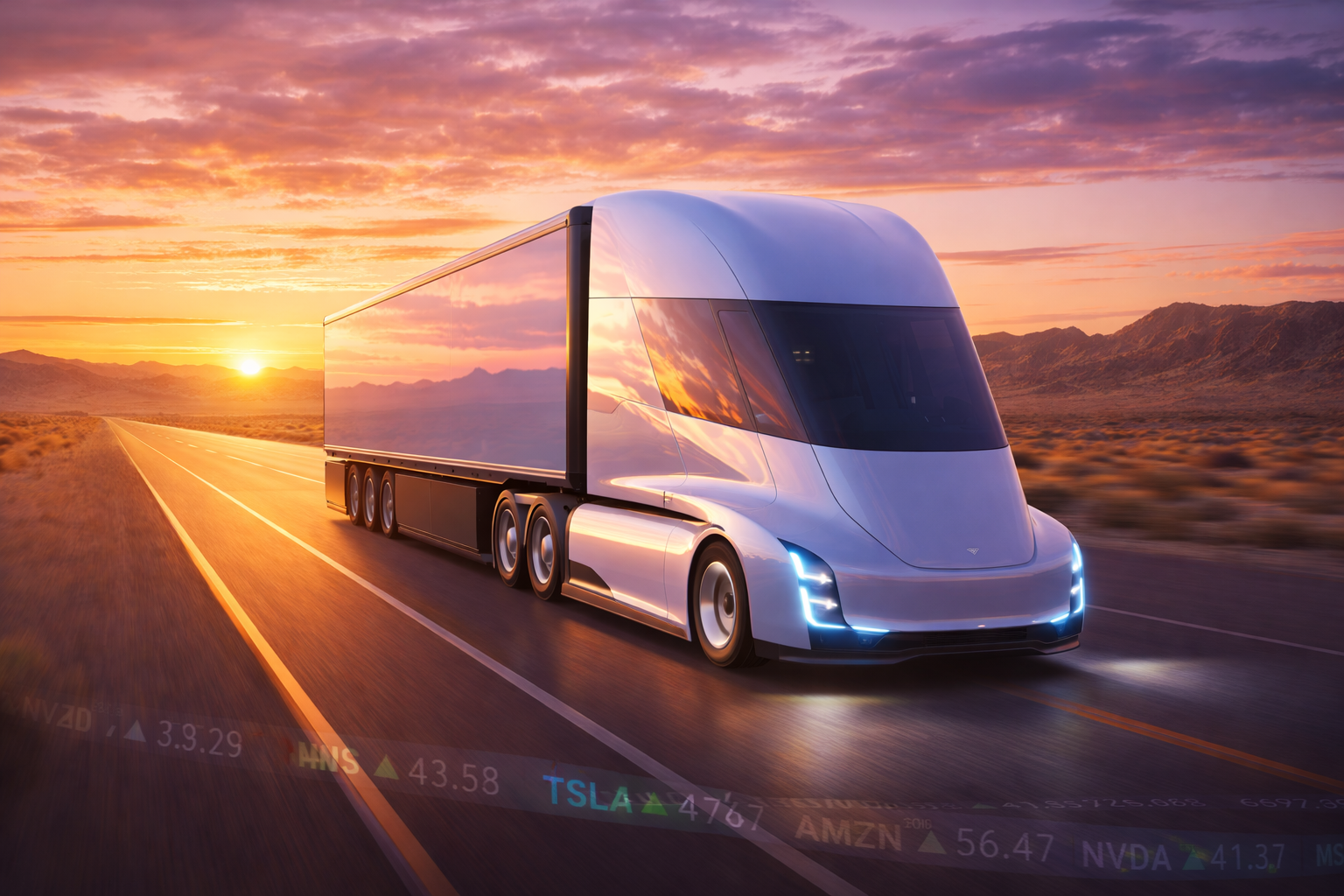
The autonomous vehicle space has a complicated relationship with public markets. Numerous self-driving startups have gone public via SPAC, faced harsh scrutiny from investors expecting faster commercialization, and seen their valuations collapse. Einride is taking a different path to the public markets, and the $113 million PIPE it just raised suggests investors see something different here.
Thank you for reading this post, don't forget to subscribe!The Swedish electric autonomous truck company has been building in relative quiet compared to the headline-grabbing autonomous passenger vehicle companies. That quieter approach may turn out to be its strongest competitive advantage.
What Is Einride?
Einride designs, manufactures, and operates electric autonomous freight vehicles. Its flagship product is the Pod, a cabless electric truck designed specifically for autonomous operation in controlled environments like distribution centers, ports, and logistics campuses. Unlike autonomous passenger vehicles that need to handle the full complexity of urban traffic, Einride’s initial commercial deployments operate in environments where the use case is more constrained and the path to profitability is clearer.
The company also operates a freight network and a transport-as-a-service business, meaning it does not just sell trucks. It sells freight capacity and manages the full operational stack of running autonomous logistics, which creates a recurring revenue model that is more attractive to public market investors than hardware unit sales alone.
The Einride Pod: What Makes It Different
- Cabless design: No cab means the vehicle is purpose-built for autonomy, not retrofitted
- Electric powertrain: Zero tailpipe emissions, lower operating cost per mile than diesel
- Remote monitoring: Human operators supervise multiple vehicles simultaneously from operations centers
- Geofenced operation: Deployed in defined operational domains where mapping and conditions are controlled
- Fleet management software: Einride’s Saga platform manages routing, charging, and maintenance
The $113 Million PIPE and What It Signals
A PIPE (Private Investment in Public Equity) is a financing mechanism often used by companies preparing for or in transition to public markets. It allows institutional investors to take positions at a negotiated price ahead of or alongside a public offering. Einride’s $113 million PIPE is a vote of confidence from institutional investors who have done the detailed diligence that precedes that kind of commitment.
The timing suggests Einride’s public market debut is approaching. The company has not confirmed a specific timeline or venue (NYSE, Nasdaq, or a European exchange), but the capital raise and the language around its “public debut” indicates the IPO preparation process is well underway.
PIPE Investors Know Something: PIPE financing rounds attract investors who have access to company financials, operational metrics, and management teams at a level of detail that public investors cannot access pre-IPO. When institutional capital flows into a PIPE at meaningful scale, it signals confidence in the underlying business fundamentals.
Einride’s Commercial Traction
Unlike several autonomous vehicle companies that raised public market capital on the strength of technology demonstrations and promise, Einride has actual commercial customers operating actual vehicles. The company has deployed its autonomous trucks with clients including GE Appliances, DB Schenker, Electrolux, and Oatly.
These are not pilot programs. They are operational deployments generating revenue from real freight moved. The commercial validation is arguably the most important differentiator between Einride and the AV companies that struggled post-SPAC.
The Regulatory Environment for Autonomous Trucks
Commercial freight vehicles operate under different regulatory frameworks than passenger vehicles. In the United States, the FMCSA has been developing rules for automated commercial vehicles that are more clearly defined than the patchwork of state-level passenger AV regulations. Einride’s European origin also gives it experience operating under the stricter regulatory environments in Sweden, Germany, and the UK, which may prove advantageous as US regulations formalize.
The controlled-environment deployment strategy also reduces regulatory friction significantly. A fully autonomous truck operating in a defined geofence on private logistics property faces far fewer regulatory hurdles than a mixed-traffic autonomous vehicle navigating public roads.
The Market Opportunity: Why Freight Automation Is a Different Bet
The global logistics and freight market is measured in the trillions of dollars annually. The driver shortage in commercial trucking is a well-documented structural problem, with the American Trucking Associations estimating a shortage of tens of thousands of qualified drivers. Autonomous freight vehicles address a real supply-side constraint in an industry that cannot afford to wait for the perfect technology to reach the perfect regulatory clarity.
The economics of autonomous freight are also more favorable than autonomous passenger vehicles. Commercial trucks operate on predictable routes at predictable times, carry high-value freight where the cost of delay is well-understood, and generate revenue per hour of operation at a rate that justifies the investment in autonomous systems much more clearly than a $20 rideshare.
Bottom Line: Einride’s $113M PIPE and upcoming public debut represents the most credible autonomous freight IPO story in the market. Commercial customers, real revenue, purpose-built hardware, and a software-plus-operations model gives it a fundamentally stronger public market narrative than most AV companies before it.
Related: Waymo Expanding to Chicago and Charlotte | Tesla Robotaxi 2025 Update | Future of Autonomous Logistics
Stay Informed With the Latest & Most Important News



Top News
- Google’s AI-Powered Workspace in Search Is Now Available to All US Users: Here Is What Actually Changed

- How Jeffrey Epstein Used Silicon Valley’s Network: What the Reporting on Reid Hoffman and Tech’s Elite Reveals

- Where to Preorder the iPhone 17E Right Now: Every Deal Ranked Before the March 11 Launch

- Google Apps Experience and Games Level Up: The Programs That Could Cut Your Play Store Commission Significantly

- Google Is Not Waiting for a Settlement: It Just Killed the 30 Percent App Store Fee Unilaterally














Advertisement