

Now Reading: Console Exclusives Might Be Making a Comeback: Here Is What That Means for Every Platform
-
01
Console Exclusives Might Be Making a Comeback: Here Is What That Means for Every Platform
Console Exclusives Might Be Making a Comeback: Here Is What That Means for Every Platform

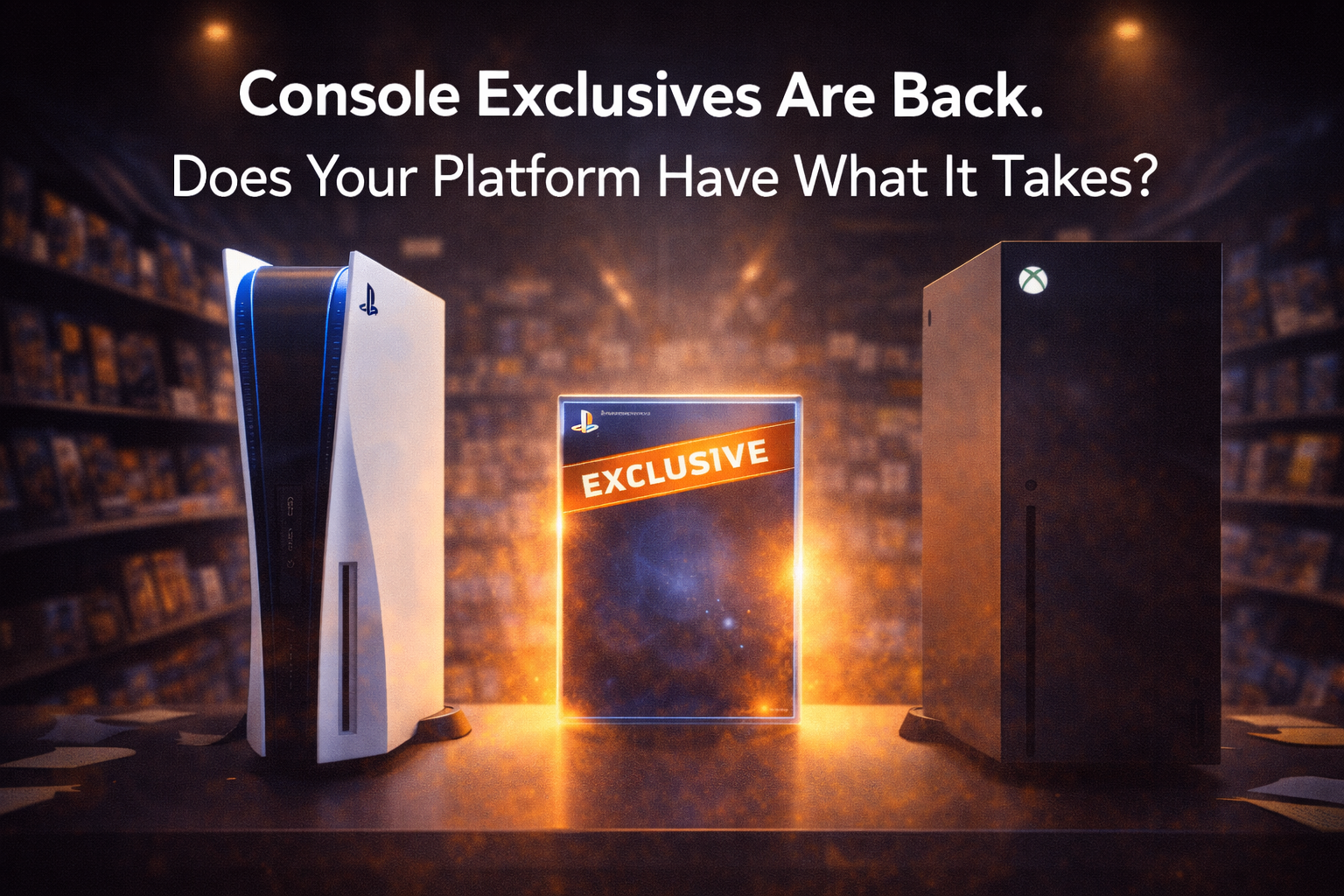
The console exclusives era was supposed to be ending. Microsoft’s strategy of releasing all Xbox titles on PC Game Pass the same day they hit the console seemed like an acknowledgment that hardware exclusivity was a relic of an earlier era. Sony was releasing PlayStation titles on PC months or years after their console debut. And Nintendo’s titles eventually found their way to emulation even if not to official competing platforms.
Thank you for reading this post, don't forget to subscribe!The narrative of a post-exclusives gaming world looked clear. And then the market started pushing back. Reports indicate that console exclusivity strategies are returning, that publishers are reconsidering the PC Day One approach, and that the hardware platforms themselves are reassessing whether the multiplatform push has actually served their interests.
Why Exclusives Went Away and Why They Are Coming Back
The Multiplatform Logic That Made Sense
The push toward multiplatform releases was driven by legitimate commercial reasoning. PC gaming has a massive and growing addressable market. Game Pass needed content volume to justify subscriptions. Steam sales of previously PlayStation-exclusive titles like God of War and Horizon Zero Dawn were extremely strong, suggesting significant revenue opportunity from the PC market that console-only releases were leaving on the table.
From a pure revenue maximization perspective, releasing on all platforms captures the maximum addressable market for any individual title. The argument against exclusivity was that you were deliberately leaving money on the table to serve a platform strategy that might not be worth the revenue sacrifice.
Why That Logic Is Being Questioned
The problem with the pure revenue maximization argument is that it underweights the strategic value of exclusivity: its effect on hardware sales, subscription value perception, and competitive differentiation. A platform with genuinely exclusive content gives potential hardware buyers a reason to choose that platform that does not exist in a world where all the best games are available everywhere.
Sony’s most recent data suggests that the PlayStation installed base has been growing in markets and demographic segments where exclusive titles are the primary driver of console purchase decisions. The God of War and Spider-Man franchises are not just successful games. They are hardware movers. Making them available on PC reduces their hardware-driving effect even if it increases their total revenue.
The Hardware Mover Math: A console exclusive that sells 5 million copies on PlayStation and drives 500,000 incremental hardware sales at $500 per console generates $250 million in hardware revenue in addition to software revenue. The same game on PC might sell an additional 2 million copies at $70 each, generating $140 million. The exclusivity benefit can exceed the multiplatform revenue in the right circumstances.
PlayStation’s Recalibration
Sony is reportedly reassessing the PC release timeline and strategy for its first-party titles. The shift is not toward complete exclusivity forever, but toward longer windows between PlayStation debut and PC availability, and potentially toward PC ports that are positioned as premium versions rather than same-or-cheaper alternatives.
The calculus has also been affected by PlayStation’s awareness that Microsoft’s Game Pass strategy, which relied on first-party exclusives to drive subscriptions, has not produced the subscription growth that justified the strategy. If Game Pass is struggling despite Xbox exclusives, the implication is that exclusivity alone is not sufficient to drive subscription adoption, which removes one of the key arguments for the multiplatform approach.
Xbox: The Platform Identity Crisis
Microsoft’s situation is different and more complex. Xbox has been the pioneer of the day-one PC release strategy, and reversing it now would require acknowledging that the strategy has not achieved its goals. The Game Pass subscriber count is not public, but signals suggest growth has been slower than the company needed to justify the strategy.
The question for Xbox is not just whether to return to exclusivity but what exclusivity means for a platform that has been explicitly positioning itself as a service that runs on all devices including PC and mobile. Returning to console exclusivity would require resolving the contradiction between a hardware-exclusive strategy and a platform-everywhere subscription strategy.
Nintendo: The Exclusivity Champion
Nintendo has never seriously wavered on exclusivity as a strategic foundation. Mario, Zelda, Pokemon, and Metroid remain Nintendo-only experiences, and the company’s hardware sales have been directly driven by this content strategy for decades. The Switch’s commercial success relative to Xbox’s struggles is partly attributable to Nintendo’s consistent maintenance of exclusivity as a hardware purchase driver.
As the Switch successor launches, Nintendo’s approach provides a useful comparison point for Sony and Microsoft: a consistent exclusivity strategy, maintained even when third-party ports would generate additional revenue, creates a more coherent platform identity and a cleaner hardware purchase rationale.
What This Means for PC Gamers
For PC gamers who have become accustomed to PlayStation titles arriving with high-quality ports months after console release, a return to longer exclusivity windows is genuinely disappointing. The trend toward PC availability has been one of the most consumer-friendly developments in gaming hardware strategy, and its partial reversal is a step backward for the subset of players who have chosen PC as their primary platform.
- Expect longer PC port windows for Sony first-party titles: 18 to 24 months rather than 12 months
- Xbox exclusives on PC through Game Pass are unlikely to change given Microsoft’s platform strategy commitments
- Third-party publishers are more likely to maintain multiplatform Day One releases given the revenue logic
- Nintendo Switch successor titles will remain Nintendo-exclusive with near certainty
Bottom Line: Console exclusives are coming back because the market data suggests that multiplatform releases have been more corrosive to hardware platform differentiation than the incremental revenue they generate was worth. The gaming platforms that have the strongest hardware sales in 2025 are the ones with the strongest exclusive content. That lesson is being relearned.
Related: Is Xbox Dying? Microsoft Gaming Strategy | PlayStation Moving Away From PC Ports | Best Console Games of 2025
Related Posts


Stay Informed With the Latest & Most Important News



Top News
- Google’s AI-Powered Workspace in Search Is Now Available to All US Users: Here Is What Actually Changed
- How Jeffrey Epstein Used Silicon Valley’s Network: What the Reporting on Reid Hoffman and Tech’s Elite Reveals

- Where to Preorder the iPhone 17E Right Now: Every Deal Ranked Before the March 11 Launch
- Google Apps Experience and Games Level Up: The Programs That Could Cut Your Play Store Commission Significantly
- Google Is Not Waiting for a Settlement: It Just Killed the 30 Percent App Store Fee Unilaterally











Advertisement