

Now Reading: The White House Used Call of Duty Footage in an Iran Strike Video: Here Is Why That Is a Bigger Deal Than It Sounds
-
01
The White House Used Call of Duty Footage in an Iran Strike Video: Here Is Why That Is a Bigger Deal Than It Sounds
The White House Used Call of Duty Footage in an Iran Strike Video: Here Is Why That Is a Bigger Deal Than It Sounds

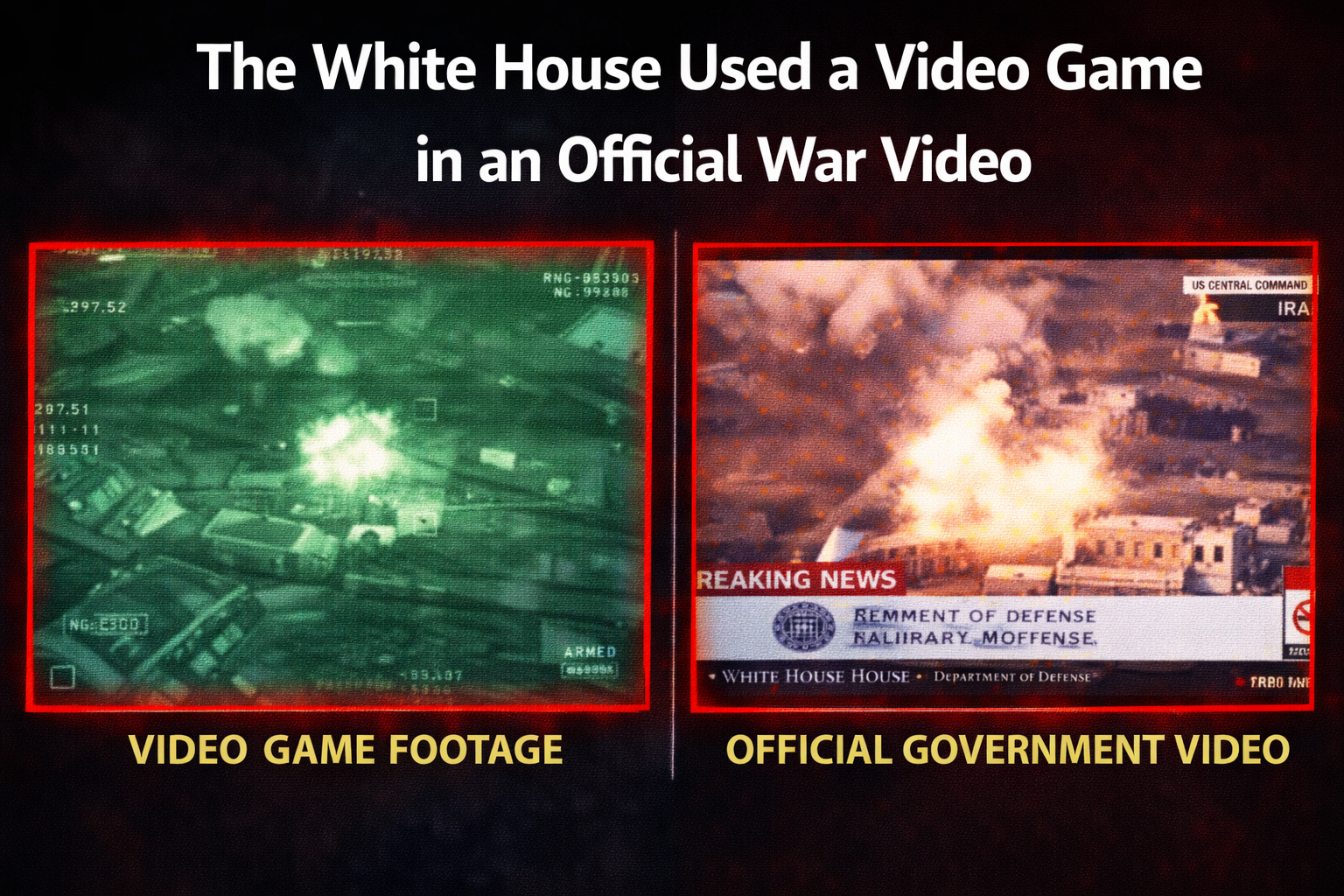
A video released by the White House to document and celebrate the outcome of airstrikes on Iran included footage sourced from Call of Duty, the Activision video game franchise. The footage depicted an airstrike sequence that was visually compelling and militarily specific in a way that real strike footage sometimes is not, which may explain its inclusion. The problem is that it was not real.
Thank you for reading this post, don't forget to subscribe!The incident was identified and reported by journalists and gamers who recognized specific visual elements from the game’s cutscenes and gameplay sequences. The White House’s response to the identification was characteristically oblique, and the video was modified or removed from official channels without a clear public acknowledgment of the sourcing error.
What Happened
The video in question was produced as a communications artifact accompanying a military operation against Iran, intended to document and justify the action to a domestic and international audience. Official government communications about military operations serve multiple purposes: informing the public, building support for the action, demonstrating capability to adversaries, and establishing a narrative of events that may later be contested.
The inclusion of video game footage in a document of this nature is jarring regardless of intent. If the inclusion was accidental, it reveals production standards inadequate for official government communications about military operations. If it was intentional, it represents a deliberate attempt to augment real footage with visually compelling fabricated imagery in a context where the distinction between real and fabricated is essential to the document’s credibility.
How Journalists and Gamers Identified the Footage
The identification followed a pattern that has become familiar in the era of open-source intelligence: people with specific knowledge of a visual domain, in this case the Call of Duty player community, recognized artifacts specific to the game’s visual style, UI elements, or specific cutscene sequences that could not be present in genuine military footage.
Call of Duty’s production values are high enough that casual viewers unfamiliar with the game would not immediately distinguish its cutscene footage from real military video. The series has invested heavily in realistic military aesthetics, consulting with military advisors and using actual equipment as references. This realism, usually a selling point for the game, becomes a liability when the footage is extracted from its entertainment context and presented without attribution in an official government communication.
The Open Source Intelligence Context: The same community investigative techniques that identified the Call of Duty footage, reverse image search, visual artifact analysis, and crowdsourced expertise, are used daily to verify and debunk military imagery from conflict zones. The capacity of distributed online communities to quickly evaluate the authenticity of official communications has fundamentally changed the credibility environment that governments operate in.
The Information Warfare Implications
The incident lands in a context where concerns about the use of AI-generated and game-engine-derived imagery in government and military communications are already active. Synthetic media capable of depicting military events that did not occur is a well-established concern among national security analysts and media credibility researchers.
The White House incident demonstrates that the credibility risk does not require sophisticated AI generation technology. The visual production quality of commercially available video games is sufficient to deceive audiences who do not have the specific expertise to identify the source. If game footage was included in an official government communication, the barrier to using more sophisticated synthetic media in similar contexts is lower than the technical challenge might suggest.
The Call of Duty Franchise Response
Activision, the publisher of Call of Duty, has not publicly commented on the unauthorized use of its footage in a government communication. The legal and commercial position is genuinely awkward: the footage is copyrighted, its use without license is a copyright violation, but the identity of the party that committed the violation, the United States federal government, creates enforcement complexity that copyright holders rarely face.
The franchise has navigated similar tensions before: its games have been cited in real-world military recruiting contexts, its realistic military settings have been discussed in debates about military glamorization in entertainment, and specific gameplay mechanics have been noted as potential training analogs. The line between a military entertainment franchise and a tool of military communication is one that the industry has not clearly drawn.
What This Means for Government Media Credibility
The incident joins a pattern of official government communications containing visual content that does not accurately represent the events being described. This pattern, documented across multiple administrations and multiple countries, suggests that the production of official government communications about military operations operates with less rigorous verification standards than the gravity of the communications would suggest they require.
For journalists, researchers, and citizens trying to evaluate official accounts of military actions, the Call of Duty incident reinforces the importance of independent verification of visual evidence before accepting it at face value, even when it appears in official government-produced documents.
Bottom Line: The White House mixing Call of Duty footage with actual Iran strike documentation is either an embarrassing production error or a deliberate misinformation choice. Neither interpretation is reassuring about the credibility standards applied to official communications about military operations. The incident is a reminder that visual evidence, even from official sources, requires critical evaluation in the current information environment.
Related: Activision Silences Call of Duty Leaker | Hacked Traffic Cams Iran War | AI Culture Wars and Real Wars
Related Posts
Stay Informed With the Latest & Most Important News


Top News
- Google’s AI-Powered Workspace in Search Is Now Available to All US Users: Here Is What Actually Changed

- How Jeffrey Epstein Used Silicon Valley’s Network: What the Reporting on Reid Hoffman and Tech’s Elite Reveals

- Where to Preorder the iPhone 17E Right Now: Every Deal Ranked Before the March 11 Launch

- Google Apps Experience and Games Level Up: The Programs That Could Cut Your Play Store Commission Significantly

- Google Is Not Waiting for a Settlement: It Just Killed the 30 Percent App Store Fee Unilaterally













Advertisement