

Now Reading: Did Live Nation Punish a Venue for Refusing Its Terms? The Concert Industry’s Monopoly Problem Explained
-
01
Did Live Nation Punish a Venue for Refusing Its Terms? The Concert Industry’s Monopoly Problem Explained
Did Live Nation Punish a Venue for Refusing Its Terms? The Concert Industry’s Monopoly Problem Explained

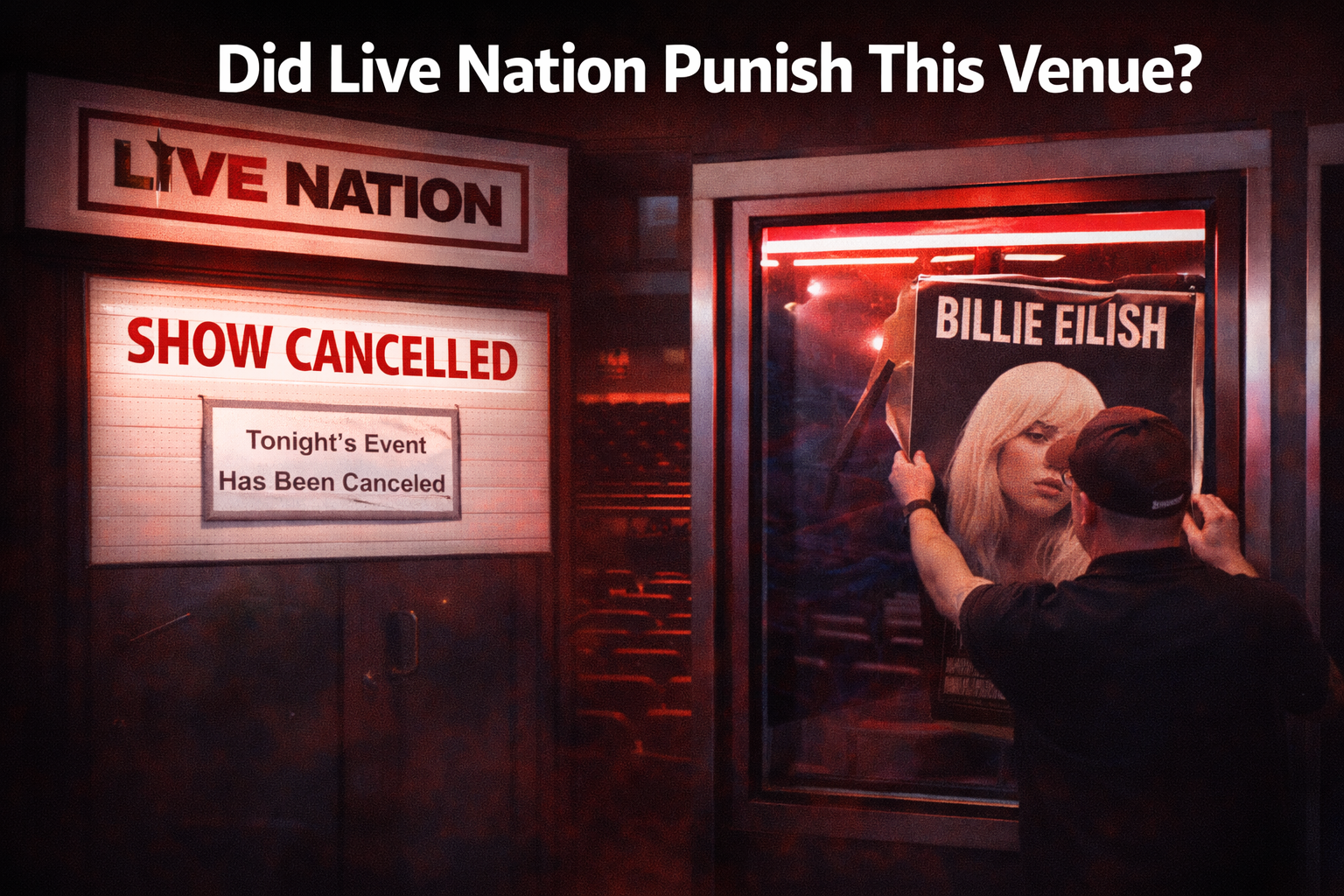
The allegation is specific and serious: a venue that declined to accept Live Nation’s terms for a touring arrangement subsequently found that a major artist’s tour stop, reportedly a Billie Eilish date, was redirected to a competing venue in the same market. The venue that declined was left without the show. The venue that accepted Live Nation’s terms got it. The message, if the allegation is accurate, is unmistakable.
Thank you for reading this post, don't forget to subscribe!Whether this specific incident occurred as described is disputed. What is not disputed is that Live Nation has the structural power to make exactly this kind of retaliation possible, that allegations of this type have appeared repeatedly in antitrust proceedings against the company, and that the concert industry’s concentration of power in Live Nation and its Ticketmaster subsidiary has created conditions where venues, artists, and fans all face consequences from a market structure that has few competitive constraints.
Live Nation’s Market Position
Live Nation is simultaneously the world’s largest concert promoter, the operator of many of the most important concert venues in major markets, and through Ticketmaster, the dominant provider of ticketing services for live events. This vertical integration, from promotion to venue to ticketing, creates structural leverage at every point in the concert industry supply chain.
The 2010 merger between Live Nation and Ticketmaster was approved by the Department of Justice with conditions specifically designed to prevent the combined company from using its ticketing monopoly to coerce venues into exclusive relationships or to disadvantage competing promoters. The DOJ’s subsequent consent decree enforcement actions suggest those conditions have not been sufficient to prevent exactly the behavior they were designed to prohibit.
How Venue Coercion Works in Practice
A venue that wants access to Live Nation’s touring artists, which represent the highest-grossing tours in the industry, must maintain a working relationship with Live Nation that meets its terms. Those terms can include preferences or requirements around ticketing provider, concession revenue sharing, scheduling exclusivity, and a range of other commercial conditions that Live Nation’s market position allows it to extract.
A venue that declines these terms, or that publicly criticizes Live Nation’s practices, faces the prospect of being passed over for routing decisions on major tours. Since major tours are the primary drivers of venue revenue and audience engagement, the ability to threaten venue access to those tours is a powerful coercive instrument that does not require explicit threats to operate effectively. The credible possibility of tour routing consequences is itself the mechanism.
The Artist Squeeze: Artists and their management teams navigate the same dynamic from a different position. Working outside Live Nation’s promotional and venue ecosystem for a major tour is possible but significantly more logistically complex and commercially risky. The network effects of Live Nation’s integrated position, the combination of its promotion relationships, venue access, and ticketing infrastructure, create friction costs for artists who attempt to work independently that have no equivalent in less concentrated markets.
The DOJ Antitrust Case Context
The Department of Justice filed a sweeping antitrust lawsuit against Live Nation in May 2024, seeking to break up the company by forcing the divestiture of Ticketmaster. The lawsuit specifically alleged that Live Nation had illegally maintained its monopoly through retaliatory conduct against venues that worked with competing promoters, through exclusionary contracts with artists, and through using Ticketmaster’s market dominance to suppress competition in ticketing.
The Billie Eilish venue allegation, if substantiated, would be directly relevant to the DOJ’s case: exactly the kind of retaliatory routing conduct that the antitrust complaint alleges as a pattern. The lawsuit has not yet been resolved, and Live Nation has contested the allegations.
The Fan Cost Consequences
The concert industry’s monopoly problem is not abstract for music fans. The consolidation of promotional, venue, and ticketing power in a single entity has produced ticket pricing outcomes that have generated unusual public outrage. The combination of face value prices set by promoters, service fees added by Ticketmaster, and the secondary market dynamics that dynamic pricing facilitates has made major concert tickets unaffordable for significant segments of the fanbase that artists built their careers serving.
Billie Eilish specifically has been vocal about Ticketmaster’s fee practices, making any situation in which her tours become tools of venue coercion particularly ironic. The artist’s publicly stated position on ticketing fairness is directly at odds with the industry structure that her commercial success operates within.
What a Structural Breakup Would Look Like
If the DOJ’s antitrust case succeeds in forcing the Ticketmaster divestiture it is seeking, the resulting structural change would separate the ticketing business from the promotion and venue businesses. This separation would remove the coercive leverage that comes from controlling both tour access and ticketing, which is the specific mechanism alleged in the venue retaliation complaints.
A structurally separated Ticketmaster would compete for venue and artist contracts on the merits of its technology and service rather than as a bundled component of the access to Live Nation’s touring portfolio. Whether this competition would produce meaningfully lower fees and better service for fans and venues is uncertain, but it would eliminate the specific coercive dynamic that the antitrust case targets.
Bottom Line: Whether Live Nation specifically redirected a Billie Eilish date to punish a venue is disputed. Whether Live Nation has the structural power to do exactly that, and whether it has used that power in ways that harm competition and consumers, is what the DOJ antitrust case is specifically about. The concert industry’s market structure creates coercion conditions that exist independently of any specific incident.
Related: Activision Silences Call of Duty Leaker | Zillow CEO Housing Crisis | Three Companies Dominated $189B VC
DOJ Live Nation antitrust lawsuit
Stay Informed With the Latest & Most Important News



Top News
- Google’s AI-Powered Workspace in Search Is Now Available to All US Users: Here Is What Actually Changed
- How Jeffrey Epstein Used Silicon Valley’s Network: What the Reporting on Reid Hoffman and Tech’s Elite Reveals
- Where to Preorder the iPhone 17E Right Now: Every Deal Ranked Before the March 11 Launch

- Google Apps Experience and Games Level Up: The Programs That Could Cut Your Play Store Commission Significantly

- Google Is Not Waiting for a Settlement: It Just Killed the 30 Percent App Store Fee Unilaterally












Advertisement