

Now Reading: PlayStation Is Moving Away From PC Ports: Here Is What Sony’s Strategy Reversal Means for You
-
01
PlayStation Is Moving Away From PC Ports: Here Is What Sony’s Strategy Reversal Means for You
PlayStation Is Moving Away From PC Ports: Here Is What Sony’s Strategy Reversal Means for You

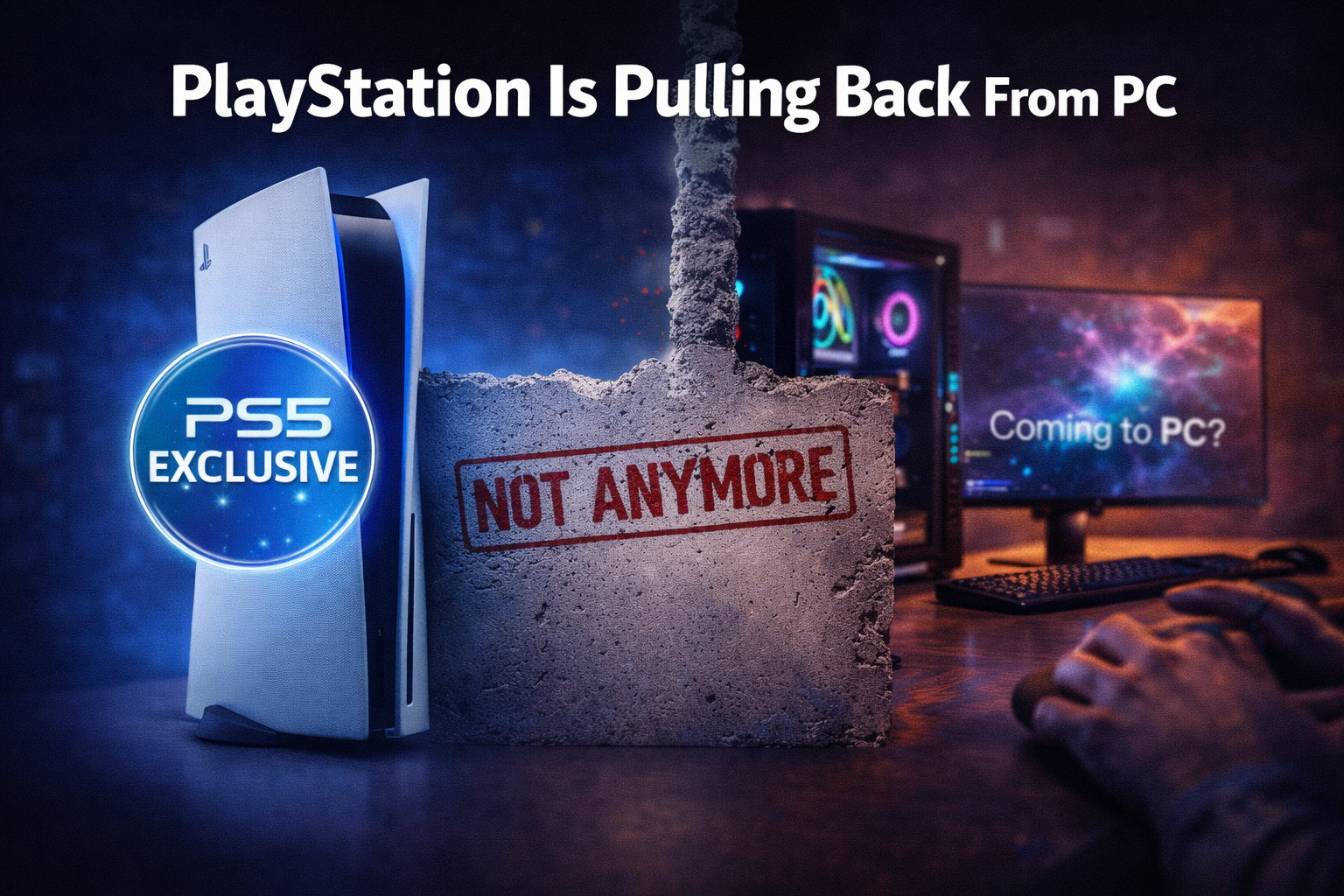
Sony’s decision to port PlayStation exclusives to PC was one of the most consequential shifts in console gaming strategy of the past decade. God of War, Horizon Zero Dawn, Spider-Man, and a growing list of PlayStation-first titles made their way to Steam, often selling impressively and introducing PlayStation game design to a massive PC audience that had grown up without them.
Thank you for reading this post, don't forget to subscribe!Reports now indicate that Sony is reconsidering this strategy, moving away from the aggressive PC port pipeline that characterized the past few years in favor of an approach that prioritizes hardware platform differentiation and longer console exclusivity windows. For PC gamers who have been playing their way through the PlayStation catalog on Steam, this represents a meaningful change in their gaming future.
Why Sony Started Porting to PC in the First Place
Sony’s PC port strategy had clear commercial logic when it was introduced. PlayStation-first titles that had already recovered their development costs through console sales could generate additional revenue from Steam releases with relatively modest additional investment. The PC gaming market is large, underserved by first-party Sony content historically, and willing to pay full price for quality games years after their console debut.
The ports also served a strategic purpose: they introduced PlayStation’s game design philosophy, known for high-budget narrative experiences with strong production values, to PC players who had never had a reason to consider a PS5 purchase. Some of those PC players subsequently bought PlayStation hardware to access games not yet available on PC. The ports were both direct revenue generators and brand awareness investments.
The Data That Changed Sony’s Thinking
The case for pulling back from aggressive PC porting rests on data that Sony’s internal analysis has reportedly produced about the relationship between PC availability and console hardware sales. If PlayStation titles available on PC are reducing the hardware purchase motivation for fence-sitters who might otherwise buy a PS5 to access those games, the revenue from PC ports may be more than offset by lost hardware and first-party software revenue from the console side.
This analysis is genuinely uncertain. The counterfactual, how many PC players would have bought a PS5 to access games that are currently available on Steam, is not directly measurable. Sony’s internal models appear to have reached conclusions that favor exclusivity over the PC revenue opportunity, but the assumptions underlying those models could reasonably produce different conclusions.
The Hardware Mover Calculus: A single compelling exclusive can drive hundreds of thousands of hardware sales when it is truly unavailable elsewhere. At $500 per console plus the first-party software spend that follows hardware purchase, the revenue from hardware-motivated sales can exceed PC port revenue for major titles. Sony appears to have concluded that this hardware leverage is worth more than the incremental PC revenue.
Which PlayStation Games May No Longer Come to PC
The strategy shift does not mean zero PC ports going forward. Sony has existing release commitments and is likely to honor them. But the pipeline of future first-party titles may be more limited, with longer windows between PS5 debut and potential PC availability, or some titles remaining PS5-exclusive indefinitely.
The categories most affected are the flagship system-seller franchises: God of War, Spider-Man, Horizon, and Ghost of Tsushima successors are the titles whose PC availability most directly undermines the PS5 value proposition. Smaller first-party titles and multiplatform games are less strategically affected by the exclusivity argument.
Games That Are Still Confirmed or Likely for PC
- Previously announced PC ports in the pipeline will proceed as committed
- Live service titles like Helldivers 2 and Destiny partnership games maintain PC releases for player base reasons
- Older back catalog titles continue to arrive on PC with reduced urgency
- Horizon and Ratchet and Clank series, which have established PC presences, may continue at longer intervals
What This Means for PC Gamers
PC gamers who have been playing the PlayStation back catalog on Steam should take stock of what is currently available and prioritize accordingly. The games on Steam now are not going away. The question is what the future release cadence looks like.
The practical advice is to treat the current PlayStation PC catalog as a finite and valuable library that may not expand at the rate the past few years suggested. If there are PlayStation games currently on Steam that you have been meaning to play, now is a reasonable time to prioritize them.
The Broader Console-PC Relationship
Sony’s strategy shift is a data point in the ongoing evolution of the console-PC relationship. The clear boundaries between console and PC gaming that defined the previous generation, where PlayStation games were console-exclusive and PC games were PC-exclusive, blurred significantly during the current generation. Whether Sony’s pullback represents a return to those clearer boundaries or a temporary strategic recalibration will depend on how the PlayStation hardware business performs relative to Sony’s expectations.
For the gaming industry as a whole, the console-PC boundary question has significant implications for developer strategy, hardware investment decisions, and the competitive dynamics between Sony, Microsoft, and Nintendo. Microsoft’s all-platforms approach is at one extreme. Nintendo’s exclusive hardware strategy is at another. Sony’s position somewhere in between is being actively recalibrated based on real commercial data rather than strategic ideology.
Bottom Line: PlayStation’s move away from aggressive PC porting is a commercial decision driven by hardware leverage analysis, not a punishment for PC gaming. For PC gamers, the practical implication is that the PlayStation back catalog on Steam is more complete today than it may be in three years, and that some upcoming PlayStation titles may not come to PC at all or may take significantly longer. Adjust your wishlist accordingly.
Related: Console Exclusives Making a Comeback | Xbox in Danger Microsoft Strategy | Best Games of 2025
Stay Informed With the Latest & Most Important News



Top News
- Google’s AI-Powered Workspace in Search Is Now Available to All US Users: Here Is What Actually Changed
- How Jeffrey Epstein Used Silicon Valley’s Network: What the Reporting on Reid Hoffman and Tech’s Elite Reveals

- Where to Preorder the iPhone 17E Right Now: Every Deal Ranked Before the March 11 Launch
- Google Apps Experience and Games Level Up: The Programs That Could Cut Your Play Store Commission Significantly
- Google Is Not Waiting for a Settlement: It Just Killed the 30 Percent App Store Fee Unilaterally












Advertisement