

Now Reading: The Candidate Silicon Valley Built and Now Wants to Tear Down: How the Tech Industry Lost Control of Its Political Bet
-
01
The Candidate Silicon Valley Built and Now Wants to Tear Down: How the Tech Industry Lost Control of Its Political Bet
The Candidate Silicon Valley Built and Now Wants to Tear Down: How the Tech Industry Lost Control of Its Political Bet

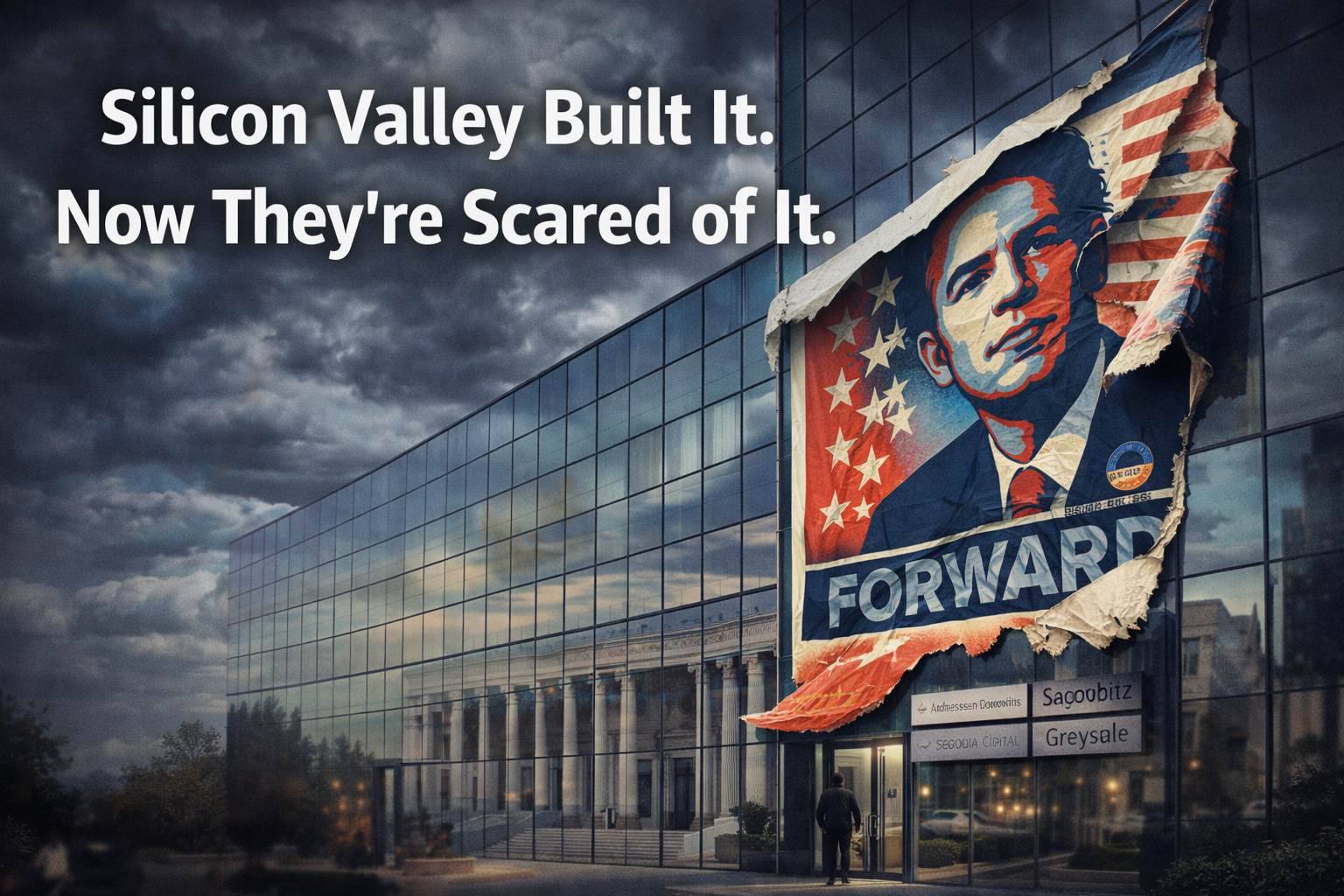
The technology industry’s relationship with political power has always been complicated. For most of its history, Silicon Valley operated with the implicit understanding that it was building tools and platforms, not governing. The political engagement that tech companies pursued was primarily regulatory in nature: lobbying for favorable intellectual property treatment, immigration policy for skilled workers, and light-touch internet regulation.
Thank you for reading this post, don't forget to subscribe!The 2024 election cycle changed that relationship fundamentally. A significant faction of Silicon Valley’s most powerful investors and founders made a deliberate decision to support and amplify political candidates and movements that promised to protect tech interests from regulatory action, reduce government oversight of AI and crypto, and remove what they characterized as bureaucratic friction from innovation. The outcome of that bet is now becoming clear, and multiple constituencies within the tech industry are quietly, and sometimes loudly, regretting their role in it.
How Silicon Valley Decided to Get Political
The tech industry’s political turn did not happen randomly. It was driven by a specific set of concerns that had been building through the Biden administration: SEC enforcement actions against crypto companies, FTC antitrust challenges to major acquisitions including Microsoft-Activision, increased scrutiny of social media platforms’ content moderation practices, and immigration enforcement that created uncertainty for the H-1B visa programs that tech companies depend on heavily.
Against this backdrop, a cohort of venture capitalists, crypto founders, and tech executives concluded that the existing political alignment, general support for tech industry growth combined with increasing regulatory pressure, was no longer serving their interests. The rational response, they reasoned, was to actively back candidates and movements that would deliver a different regulatory posture.
The Effective Accelerationism Political Turn
The ideology that gave intellectual framework to the tech political turn was effective accelerationism, which as a political posture translated to supporting rapid deregulation, opposing what was characterized as stifling government oversight, and backing political figures who promised to remove barriers to technological deployment. Marc Andreessen’s widely discussed political memo articulated this position for the VC community, arguing that AI and crypto regulation specifically represented an existential threat to American innovation competitiveness.
This argument resonated with a specific subset of the tech community: founders and investors whose specific businesses faced regulatory headwinds that had real financial consequences. Crypto companies facing SEC enforcement actions, AI labs anticipating regulation that might limit deployment, and social media platforms fighting content moderation obligations all had direct financial interests in regulatory rollback.
The Coalition Logic: The tech political turn was driven by interests, not ideology. Different constituencies within the tech industry had different specific regulatory concerns, but the shared interest in reducing government oversight created a temporary coalition that was powerful enough to have real political impact but too fragmented to maintain coherent political goals after electoral success.
What the Tech Industry Got and Did Not Get
The political bet achieved some of its stated objectives: crypto regulatory enforcement has been scaled back, the administration has been broadly supportive of AI development without restrictive regulation, and several tech-hostile regulatory figures have been replaced. These outcomes represent real wins for the specific constituencies whose regulatory concerns drove the political engagement.
What the tech industry did not anticipate was the way that political engagement would intersect with broader policy priorities that created new concerns for tech companies. Immigration enforcement, including uncertainty around H-1B visa status and high-skilled worker immigration, has created significant operational anxiety for companies that depend on international engineering talent. Trade policy changes affecting hardware supply chains and semiconductor sourcing have created cost and availability challenges. And the government’s own expansionary role in tech decision-making, the thing that political engagement was supposed to reduce, has in some respects increased.
The DOGE Paradox
The Department of Government Efficiency represents the most direct expression of the tech industry’s political influence: a government function run by a tech CEO using startup-style methodology to restructure federal operations. For tech founders who supported the political movement that enabled DOGE, the organization is simultaneously the purest expression of their vision, tech-style disruption applied to government bureaucracy, and a source of concerns that they did not anticipate.
DOGE’s access to federal data systems, its influence over agencies that regulate tech companies, and its precedent of unchecked executive power operating in the technology space are all things that the tech industry’s political theory should identify as potential problems. The realization that you have helped create a powerful government entity with significant tech sector influence, led by someone whose interests are not uniformly aligned with the broader tech industry, is producing visible second thoughts among some of the political engagement’s original proponents.
The Backlash Within Silicon Valley
The tech industry’s political consensus has fractured significantly since the election. The original coalition has divided into at least three camps: those who remain supportive of the political direction they backed, those who are quietly concerned but unwilling to publicly criticize for fear of retaliation, and a smaller but vocal group who are openly expressing regret and concern.
The concern is not purely ideological. It is, characteristically for Silicon Valley, about business interests. Companies that depend on federal research funding, academic partnerships, and international talent are seeing those dependencies become leverage points in ways they did not anticipate. The tech industry is learning that political power, once invited into business, is difficult to contain within the specific domains where you wanted its help.
What the Tech Industry Does Next
The options available to a tech industry that regrets aspects of its political engagement are constrained by the dynamics of the situation it has helped create. Open opposition to the political direction creates regulatory retaliation risk. Silent compliance enables continued escalation. Selective advocacy on specific issues, the traditional tech lobbying model, is harder when the political environment is more polarized and the cost of being seen as politically disloyal is higher.
The most likely medium-term trajectory is a retreat from explicit political alignment back toward the technology industry’s traditional preference for regulatory engagement over electoral engagement, combined with significant investment in bipartisan relationship-building to reduce the single-point dependency that the recent political consolidation created.
Bottom Line: Silicon Valley’s political bet produced some of what it sought and created problems it did not anticipate. The tech industry built a political movement significant enough to achieve regulatory wins and powerful enough to create new dependencies and risks that the original coalition did not adequately consider. The lesson, that political power is not a precision instrument, is one the industry will be processing for years.
Related: Elon Musk Founder Power Rewritten | ChatGPT Uninstalls After DoD Deal | AI Culture Wars Explained
Andreessen Horowitz political writings
Stay Informed With the Latest & Most Important News



Top News
- Google’s AI-Powered Workspace in Search Is Now Available to All US Users: Here Is What Actually Changed

- How Jeffrey Epstein Used Silicon Valley’s Network: What the Reporting on Reid Hoffman and Tech’s Elite Reveals
- Where to Preorder the iPhone 17E Right Now: Every Deal Ranked Before the March 11 Launch

- Google Apps Experience and Games Level Up: The Programs That Could Cut Your Play Store Commission Significantly

- Google Is Not Waiting for a Settlement: It Just Killed the 30 Percent App Store Fee Unilaterally













Advertisement