

Now Reading: Behavioral AI and the Compatibility Advantage: Why the Next Wave of Enterprise AI Is Personal
-
01
Behavioral AI and the Compatibility Advantage: Why the Next Wave of Enterprise AI Is Personal
Behavioral AI and the Compatibility Advantage: Why the Next Wave of Enterprise AI Is Personal

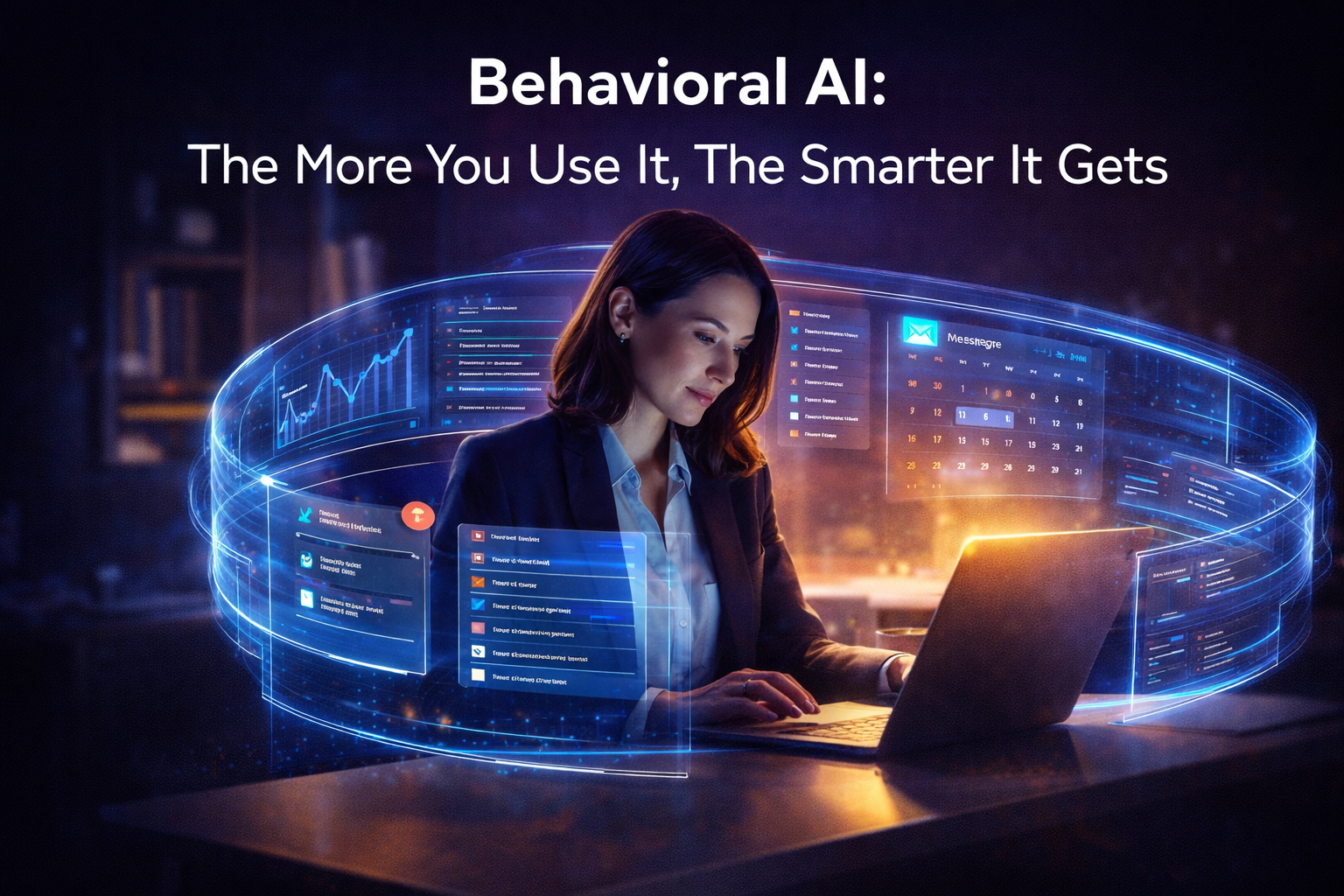
The first generation of enterprise AI was about doing tasks faster. Summarize this document. Generate a first draft. Answer this question. The productivity gains were real and they drove the first wave of enterprise AI adoption. But that wave is plateauing, because task-level productivity gains are becoming table stakes rather than competitive advantages.
Thank you for reading this post, don't forget to subscribe!The next generation of enterprise AI is behavioral. It is not just about what AI can do but about how AI works with specific people in specific roles using specific workflows. The companies building behavioral AI are betting that the compatibility advantage, the compounding benefit of AI that genuinely understands how you work, is worth more than any single task capability. The data is starting to support that bet.
What Behavioral AI Actually Means
Behavioral AI refers to AI systems that model and adapt to the working patterns, communication styles, decision-making preferences, and contextual needs of individual users over time. Unlike task-specific AI tools that perform the same function the same way for every user, behavioral AI systems develop a model of the user that makes their assistance more accurate, more contextually appropriate, and less friction-generating with each interaction.
The distinction matters practically. A generic AI writing assistant will produce similar output for a junior analyst and a senior partner at a consulting firm because it has no model of what each person actually needs. A behavioral AI system that has observed the senior partner’s communication style, typical client contexts, preferred argument structures, and revision patterns will produce output that requires substantially less editing and feels like genuine assistance rather than a starting point.
The Compounding Advantage: Each interaction with a behavioral AI system generates data that makes subsequent interactions better. Unlike task-specific tools where the value is roughly constant, behavioral AI creates a compounding relationship between usage and value. The longer you use it, the more it understands you, and the harder it becomes to switch to a competitor that lacks that accumulated context.
Why Compatibility Creates Competitive Moats
The Switching Cost Dynamic
Software switching costs are traditionally thought of in terms of data migration, workflow reconfiguration, and retraining. Behavioral AI creates a new category of switching cost: the accumulated behavioral model. An enterprise that has used a behavioral AI system long enough for it to develop accurate models of its employees’ working patterns faces the prospect of losing that accumulated context when switching vendors.
This creates a moat that is qualitatively different from traditional enterprise software lock-in. The moat is not primarily contractual or technical. It is experiential. Employees who have developed a working relationship with an AI that understands them will resist switching to a generic alternative even if the generic alternative is technically capable. Human attachment to effective tools is powerful, and behavioral AI is designed to trigger it.
Team-Level and Organizational Behavioral Models
The most sophisticated behavioral AI systems extend beyond individual user modeling to capture team-level and organizational patterns. Understanding how a specific sales team communicates with prospects, how a particular engineering team structures technical decisions, or how an executive team approaches strategic analysis creates value that is organizational rather than individual.
This organizational behavioral modeling is the highest-value and most defensible layer of the behavioral AI stack. Individual user models can be rebuilt at a competitor with enough time. Organizational behavioral models that capture years of institutional working patterns are substantially harder to replicate.
Behavioral AI vs. Generic AI Assistants: The Performance Gap
Empirical comparisons between behavioral AI systems and generic AI assistants show meaningful performance differences on tasks that require contextual accuracy. For tasks where generic AI is sufficient, such as simple summarization or basic fact retrieval, behavioral AI provides no advantage. For tasks that require understanding individual context, organizational tone, or domain-specific judgment, the gap is significant.
A key measurement dimension is edit rate: how much a user modifies the AI’s output before using it. Generic AI assistants in enterprise environments typically see high edit rates because their outputs are contextually generic. Behavioral AI systems that have accumulated sufficient user models see substantially lower edit rates, which is the clearest signal that the AI is producing output that genuinely matches what the user needs.
The Onboarding Problem
Behavioral AI’s greatest weakness is the cold start problem. Before a behavioral AI system has observed enough user interactions to build an accurate model, it performs no better than generic AI. For organizations evaluating new AI tools, this creates a challenge: the full value of behavioral AI only becomes apparent after a period of use that most procurement evaluations do not allow for.
The startups building in this category are addressing the cold start problem through several approaches: importing behavioral data from existing tools, using team or organizational role archetypes as starting models, and designing evaluation processes that allow for the ramp-up period that fair comparison requires.
Key Players Building Behavioral AI
- Glean: Enterprise search and knowledge AI with behavioral personalization based on individual usage patterns and organizational context
- Microsoft Copilot: Accumulates behavioral context across the Office 365 ecosystem over time, though the behavioral modeling is less explicit than dedicated behavioral AI systems
- Salesforce Einstein: Builds individual rep behavioral models in CRM context, adapting coaching and suggestions to individual performance patterns
- Harvey: Legal AI that adapts to individual attorney writing styles and firm-specific legal frameworks
- Emerging startups: A generation of behavioral AI companies targeting specific professional roles including finance, medicine, engineering, and education
What the Compatibility Advantage Means for Enterprise Buyers
For enterprise technology buyers, the behavioral AI category introduces a new evaluation dimension: not just what can this tool do, but how well will it fit how our specific people work. This is a harder question to evaluate in a standard procurement process because it requires longitudinal usage data that point-in-time demonstrations cannot provide.
The buyers who get this right will build AI-assisted workflows that compound in value over time. The buyers who evaluate behavioral AI with generic criteria will undervalue it during procurement and underutilize it after deployment.
Bottom Line: Behavioral AI is not the next feature in an AI assistant. It is a fundamentally different product category that creates value through compatibility and compounding rather than through raw task capability. The companies that build the deepest behavioral models of how people actually work will own the most defensible positions in enterprise AI.
Related: Who Will Own Your Company’s AI Layer | A16z AI Infrastructure Fund | Investors No Longer Looking For in AI SaaS
Glean behavioral search platform
Stay Informed With the Latest & Most Important News


Top News
- Google’s AI-Powered Workspace in Search Is Now Available to All US Users: Here Is What Actually Changed
- How Jeffrey Epstein Used Silicon Valley’s Network: What the Reporting on Reid Hoffman and Tech’s Elite Reveals

- Where to Preorder the iPhone 17E Right Now: Every Deal Ranked Before the March 11 Launch

- Google Apps Experience and Games Level Up: The Programs That Could Cut Your Play Store Commission Significantly
- Google Is Not Waiting for a Settlement: It Just Killed the 30 Percent App Store Fee Unilaterally













Advertisement