

Now Reading: TikTok Won’t Add End-to-End Encryption to Direct Messages: Why That Should Concern You
-
01
TikTok Won’t Add End-to-End Encryption to Direct Messages: Why That Should Concern You
TikTok Won’t Add End-to-End Encryption to Direct Messages: Why That Should Concern You

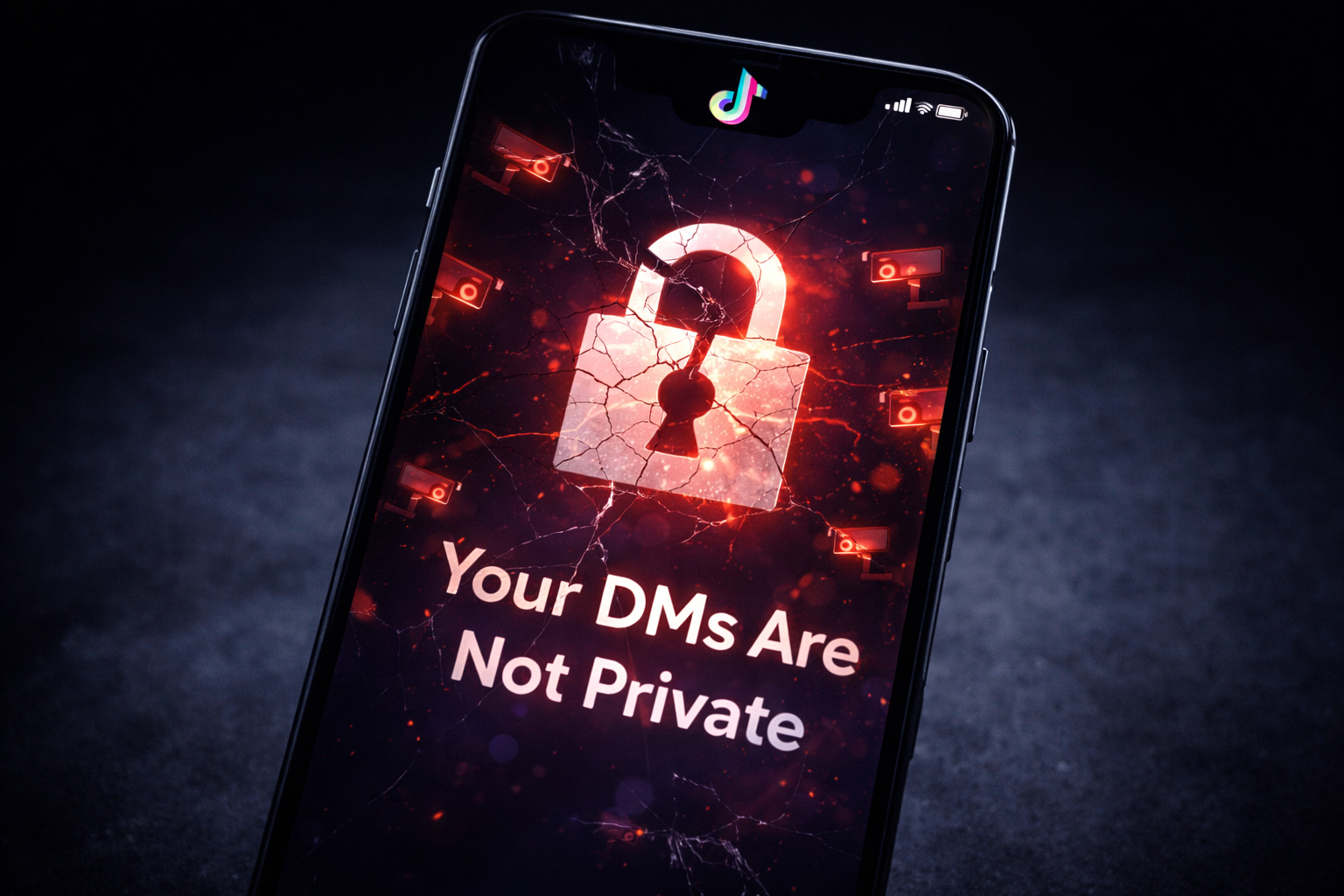
Most people use TikTok to watch videos. A growing number use its direct messaging feature to communicate with friends, creators, and brands. And as of the latest reports, every one of those messages can be read by TikTok, its employees, and potentially far more parties than that, because the company has confirmed it has no plans to add end-to-end encryption to its DM system.
Thank you for reading this post, don't forget to subscribe!In 2025, when Signal, WhatsApp, iMessage, and even Instagram DMs offer end-to-end encryption as a default or optional feature, TikTok’s refusal to implement it is not a technical limitation. It is a policy choice. Understanding what that choice means for your communications is worth taking seriously.
What Is End-to-End Encryption and Why Does It Matter?
End-to-end encryption (E2EE) is a communication security model where messages are encrypted on the sender’s device and can only be decrypted by the intended recipient’s device. Even the platform carrying the message, TikTok, WhatsApp, or Signal, cannot read the content of an encrypted message in transit or at rest on its servers.
Without E2EE, messages are encrypted in transit between your device and TikTok’s servers, but TikTok holds the keys. That means TikTok can read your DMs. So can its employees with appropriate access, so can law enforcement with a valid legal request, and so can any attacker who compromises TikTok’s servers or gains unauthorized internal access.
The Key Distinction: Transport encryption (what TikTok uses) protects your messages from external eavesdroppers on the network. End-to-end encryption protects your messages from everyone except the intended recipient, including the platform itself. These are fundamentally different levels of privacy protection.
Why TikTok Is Choosing Not to Encrypt
The decision not to implement E2EE is almost never purely technical. Platform operators have specific incentives to maintain the ability to read user communications. Safety moderation is the most commonly cited reason: detecting harassment, CSAM, grooming, and threats is significantly harder when message content is encrypted end-to-end. This is a genuine tradeoff that every major platform navigates differently.
WhatsApp and Signal have invested heavily in metadata-based and client-side safety detection systems that allow some level of abuse detection without breaking E2EE. These systems are imperfect and resource-intensive. TikTok’s choice to forgo that investment in favor of server-side content access is a business and policy decision as much as a safety one.
The ByteDance Factor
TikTok’s ownership by ByteDance, a Chinese company subject to Chinese law, adds a dimension to the encryption question that does not apply to WhatsApp or iMessage. China’s cybersecurity and national intelligence laws require companies to cooperate with government data requests. Whether and to what degree those laws apply to TikTok’s US operations has been the subject of ongoing legal and regulatory dispute.
The practical implication for users is that the lack of E2EE in TikTok DMs leaves message content accessible not just to TikTok’s trust and safety teams but potentially to a broader set of parties than users may assume. That is not a hypothetical risk in the geopolitical context of 2025.
How TikTok DM Privacy Compares to Other Platforms
Signal: Full end-to-end encryption by default for all messages, calls, and media. No metadata retention. The gold standard for private messaging.
WhatsApp: End-to-end encryption by default for all messages and calls. Metadata (who contacted whom, when, how often) retained by Meta.
iMessage: End-to-end encrypted between Apple devices. SMS fallback is unencrypted. iCloud backup optionally includes message encryption via Advanced Data Protection.
Instagram DMs: Not end-to-end encrypted by default as of early 2025, though Meta has been rolling out E2EE for personal chats progressively.
TikTok DMs: No end-to-end encryption. Server-side access to message content retained by TikTok and ByteDance.
The Oracle Outage Connection
TikTok’s infrastructure reliability came into sharp focus when a second Oracle outage caused service disruption for US users. Oracle hosts TikTok’s US data as part of the company’s Project Texas initiative, an attempt to demonstrate data sovereignty compliance to US regulators by storing American user data on US-based servers under US company management.
The Oracle outage highlights a structural dependency risk: TikTok’s US operation relies on a third-party hosting arrangement that introduces both availability and data governance complexity. From a privacy standpoint, it also underscores that TikTok’s data architecture involves multiple parties with access to user content, making the case for E2EE even more relevant for users who care about message confidentiality.
What You Should Do If You Value Private Communication
- Do not use TikTok DMs for any communication you consider sensitive, personal, or confidential
- Use Signal for genuinely private conversations: it is free, available on all platforms, and provides the strongest available encryption
- Use WhatsApp for conversations where E2EE is important but you need broader contact compatibility
- Treat TikTok DMs the same way you would treat a postcard: assume anyone handling it along the route can read it
- Review TikTok’s privacy settings periodically and limit the data the app can access on your device
Will TikTok Ever Add End-to-End Encryption?
The trajectory suggests it is unlikely in the near term. Platform operators that have committed to server-side content moderation capabilities have structural and legal reasons to resist E2EE that go beyond technical implementation challenges. The regulatory environment in the US and EU also creates pressure on large platforms to maintain content visibility for law enforcement cooperation, which runs directly counter to strong encryption.
TikTok’s particular position, navigating US regulatory pressure about Chinese data access while also being expected to cooperate with US law enforcement requests, creates an environment where committing to E2EE would create more legal and political problems than it would solve, regardless of the privacy benefits to users.
Bottom Line: TikTok’s refusal to implement end-to-end encryption for DMs is a deliberate policy choice with real privacy implications. If you communicate on TikTok, know that your messages are readable by TikTok and potentially by parties beyond its control. For sensitive communication, use Signal.
Related: iPhone Security Threats 2025 | LeakBase Shutdown and Credential Security | Best Private Messaging Apps Compared
Related Posts
Stay Informed With the Latest & Most Important News


Top News
- Google’s AI-Powered Workspace in Search Is Now Available to All US Users: Here Is What Actually Changed
- How Jeffrey Epstein Used Silicon Valley’s Network: What the Reporting on Reid Hoffman and Tech’s Elite Reveals

- Where to Preorder the iPhone 17E Right Now: Every Deal Ranked Before the March 11 Launch
- Google Apps Experience and Games Level Up: The Programs That Could Cut Your Play Store Commission Significantly

- Google Is Not Waiting for a Settlement: It Just Killed the 30 Percent App Store Fee Unilaterally












Advertisement