

Now Reading: Why Is SpaceX Going Public? What We Know About the Most Anticipated IPO in Tech History
-
01
Why Is SpaceX Going Public? What We Know About the Most Anticipated IPO in Tech History
Why Is SpaceX Going Public? What We Know About the Most Anticipated IPO in Tech History

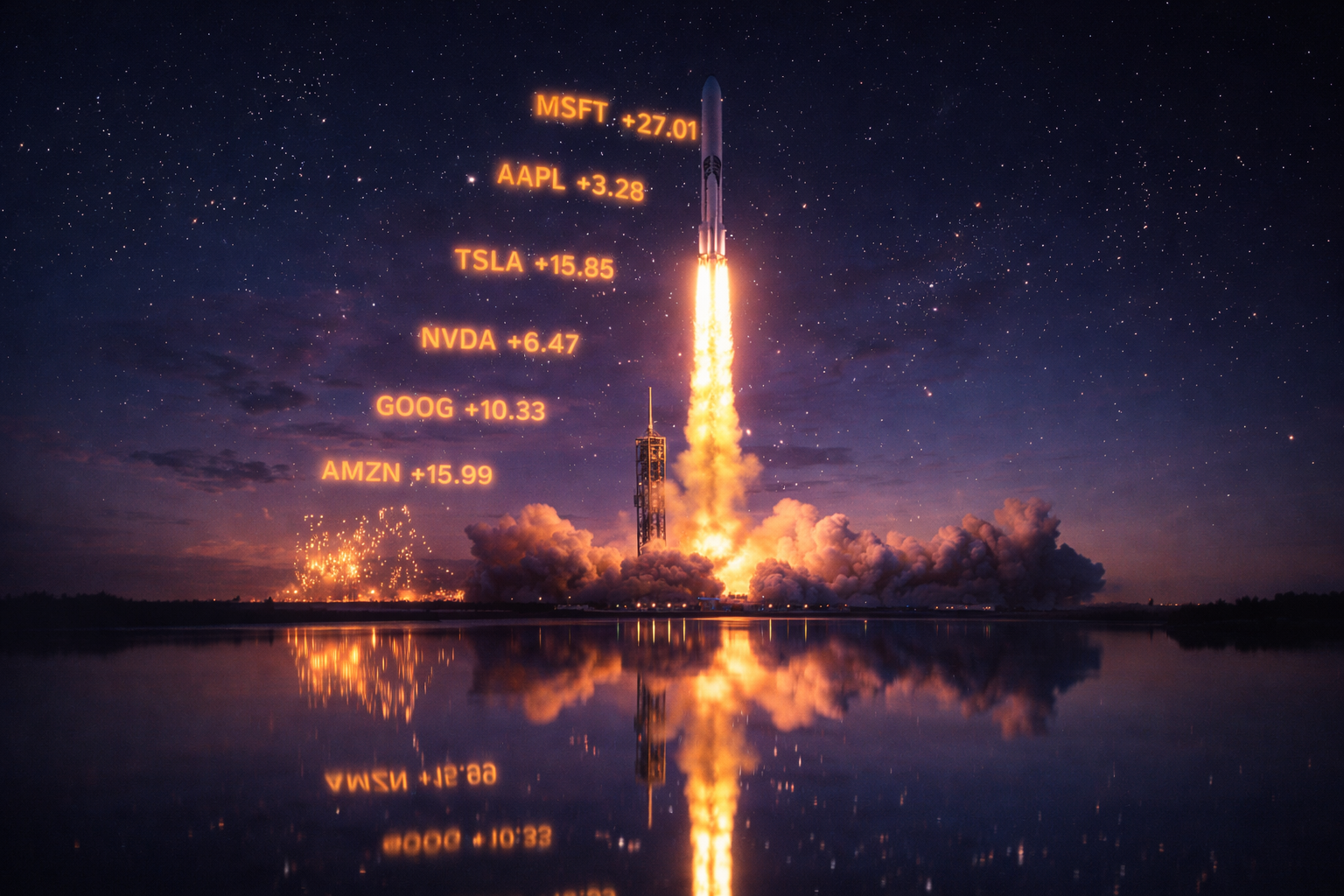
Elon Musk has never made a secret of his reservations about taking SpaceX public. In his own words, he has been hesitant to foist being public on SpaceX given the long-term nature of its mission. Making Mars a multi-planetary civilization is not a quarterly earnings story. Managing analysts’ expectations while trying to land a rocket on the Martian surface is a tension that any reasonable person would want to avoid.
Thank you for reading this post, don't forget to subscribe!And yet, signals are accumulating that a SpaceX IPO, or at minimum a major public market event, may be closer than the company has previously let on. Understanding why now, what the obstacles are, and what a public SpaceX would look like is one of the most interesting financial and space industry questions of 2025.
The Case For Going Public Now
Starlink Is a Public Company Story
SpaceX’s business structure has changed dramatically over the past five years. When Musk argued against going public, SpaceX was primarily a launch services company burning capital on rocket development. Today, Starlink, the satellite internet business, generates substantial and growing revenue from millions of paying subscribers across consumer, enterprise, maritime, aviation, and government markets.
Starlink is the kind of recurring revenue, high-growth, large-addressable-market business that public market investors are designed to value. It has real competitors, real customers, real infrastructure costs, and real revenue. Keeping that business private limits the financial flexibility available to fund its continued global expansion.
The Starlink Valuation Argument: Independent analysts have estimated Starlink’s value at anywhere from $80 billion to $150 billion as a standalone business, based on subscriber growth, average revenue per user, competitive positioning, and the strategic value of global satellite broadband coverage. Public markets would allow this value to be reflected in tradeable securities.
Tender Offer Limitations
SpaceX has managed employee liquidity and early investor returns through periodic tender offers, private share sales at internally set valuations. As the company grows and the number of employees and investors holding significant positions increases, the tender offer mechanism becomes more complex and less efficient.
Public markets provide a liquid, continuously priced exit mechanism for employees and investors that tender offers cannot replicate at scale. At some point, the cost of maintaining private status in terms of employee retention, investor relations complexity, and capital flexibility begins to outweigh the benefits of avoiding public market scrutiny.
Competitive Pressure and Capital Needs
SpaceX’s ambitious manifest, Starship development, Mars mission preparation, Starlink Gen 2 constellation expansion, and continued Falcon 9 launch operations, requires enormous and sustained capital investment. The private market has been willing to fund SpaceX at premium valuations, but private capital has limits in both scale and patience.
Public markets can provide essentially unlimited capital to a company with a sufficiently compelling story and credible financials. For a SpaceX IPO at a valuation that reflects the company’s full portfolio, the amount of capital accessible would be transformative.
Musk’s Hesitation: Why It Makes Sense
Musk’s stated concern about public market short-termism is not cynical posturing. It reflects a genuine structural challenge for companies pursuing multi-decade missions. The quarterly earnings cycle creates pressure to prioritize near-term financial metrics over long-term mission progress, and analyst coverage can become a distraction from operations.
The Tesla experience offers relevant data. Tesla went public in 2010 and spent the next decade under intense scrutiny, short-selling pressure, and analyst skepticism that Musk found genuinely burdensome. The company ultimately succeeded, but the journey was complicated by the demands of public market management in ways that a private company does not face.
The Mars Mission Problem
The specific concern about the Mars mission is the most philosophically interesting part of Musk’s public market hesitation. Investing in a genuine Mars colonization effort requires capital allocation on a time horizon and with a risk tolerance that public market investors generally cannot accommodate. The first Mars missions will not generate revenue. The infrastructure build-out required to establish a self-sustaining colony is measured in decades, not quarters.
A public SpaceX would face permanent pressure to ring-fence the Mars mission in ways that protect quarterly financials, which could structurally undermine the mission’s funding and ambition over time.
What a SpaceX IPO Might Look Like
The most widely discussed structure is a Starlink-specific IPO rather than a full SpaceX public offering. Spinning out Starlink as a separately traded entity would give the satellite internet business access to public capital and provide liquidity for investors and employees exposed to that specific business, without subjecting the full SpaceX mission including Starship and Mars to the quarterly scrutiny Musk wants to avoid.
A Starlink IPO at even the lower end of analyst valuation estimates would be one of the largest technology public offerings in history. The demand from institutional and retail investors for a piece of the satellite internet business would be significant.
Valuation Context
- SpaceX last private valuation: approximately $350 billion in recent secondary transactions
- Starlink standalone estimates: $80-150 billion based on subscriber and revenue projections
- Full SpaceX IPO at current private valuation would make it among the five largest public companies by market cap
- Comparable precedents: Few. Amazon Web Services and Google Maps are the closest comps for businesses with Starlink’s combination of infrastructure scale and recurring revenue
What Investors Should Know
SpaceX at any structure would be an unusual public company. Its founder’s priorities are explicitly non-financial in significant ways, and the missions that define its identity (Mars, Starship, next-generation space infrastructure) are investment horizons that stretch beyond any conventional DCF model’s meaningful forecast period.
Investing in a public SpaceX is as much a bet on Musk’s continued engagement and mission focus as it is on the underlying business financials. That founder-dependency risk is real and would require honest disclosure.
Bottom Line: SpaceX going public is probably a matter of when, not if. The combination of Starlink’s commercial maturity, capital needs, and employee liquidity demands makes some form of public market event increasingly inevitable. Whether that is a full SpaceX IPO or a Starlink spin-out will define the structure of one of the most important public offerings in the history of space exploration.
Related: Einride Self-Driving Trucks IPO | A16z $1.7B AI Infrastructure Fund | How To Invest in Space Tech
Stay Informed With the Latest & Most Important News
Previous Post
Next Post



Top News
- Google’s AI-Powered Workspace in Search Is Now Available to All US Users: Here Is What Actually Changed

- How Jeffrey Epstein Used Silicon Valley’s Network: What the Reporting on Reid Hoffman and Tech’s Elite Reveals

- Where to Preorder the iPhone 17E Right Now: Every Deal Ranked Before the March 11 Launch
- Google Apps Experience and Games Level Up: The Programs That Could Cut Your Play Store Commission Significantly

- Google Is Not Waiting for a Settlement: It Just Killed the 30 Percent App Store Fee Unilaterally













Advertisement