

Now Reading: MWC 2026 Barcelona: Every Phone, Gadget, and Announcement That Actually Matters
-
01
MWC 2026 Barcelona: Every Phone, Gadget, and Announcement That Actually Matters
MWC 2026 Barcelona: Every Phone, Gadget, and Announcement That Actually Matters

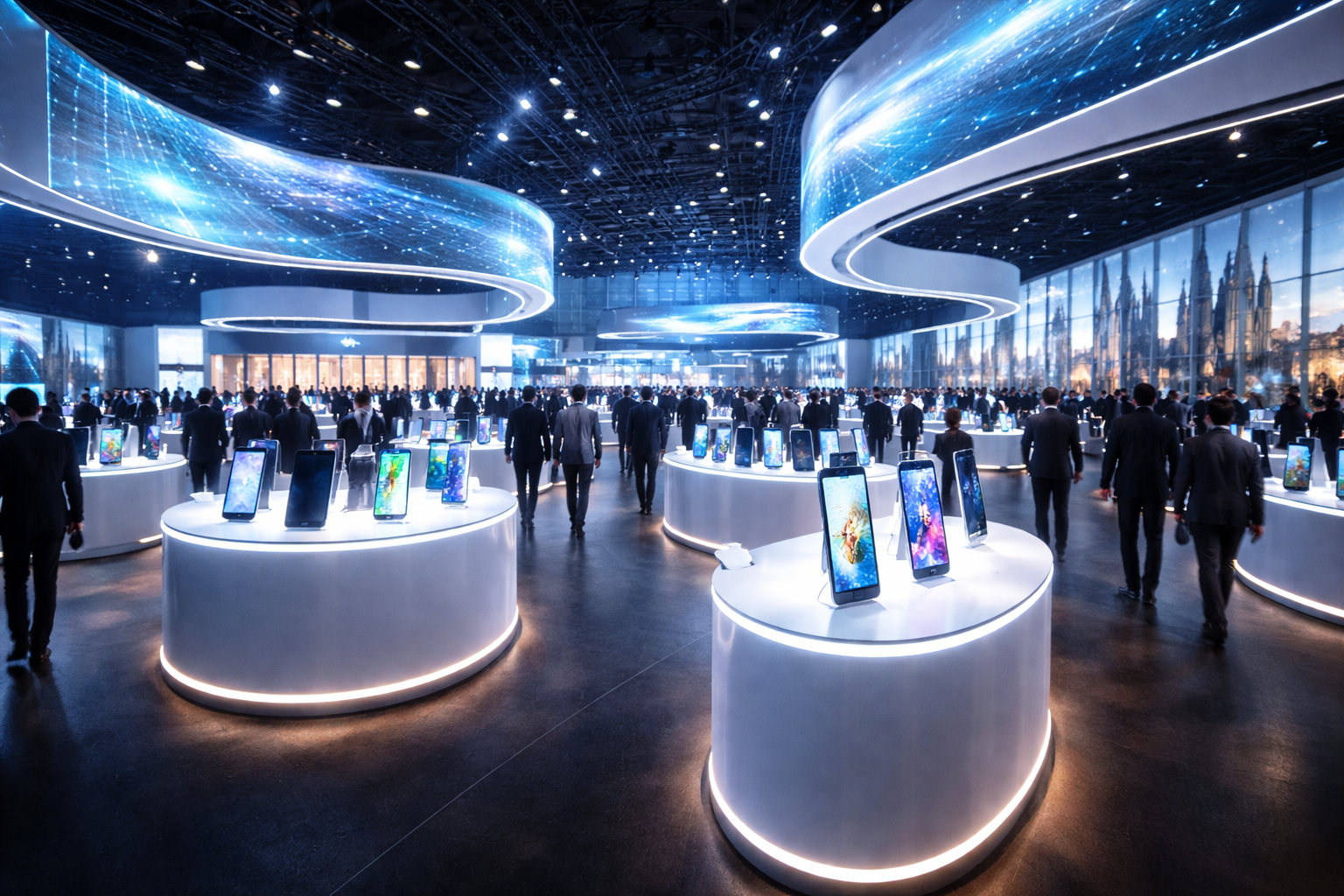
Mobile World Congress is the annual proving ground where the entire mobile technology industry shows its hand. Held in Barcelona each spring, MWC brings together device manufacturers, network operators, chipmakers, software companies, and media from around the world to announce, demonstrate, and argue about the future of mobile technology.
Thank you for reading this post, don't forget to subscribe!MWC 2026 arrived with the industry at an inflection point: 5G deployment is finally reaching meaningful global coverage, 6G standardization is in active discussion, AI has moved from a headline feature to a foundational assumption of every new device, and the foldable and modular device categories are maturing from early-adopter experiments into genuine mainstream contenders. Here is everything that mattered this year.
The Biggest Phone Announcements at MWC 2026
Samsung’s MWC Showcase
Samsung used MWC 2026 to demonstrate its next-generation foldable technology and preview its upcoming Galaxy ecosystem integrations. The company’s Galaxy AI features expanded to new device categories at the show, including tablets and wearables, with emphasis on the on-device AI processing capabilities that reduce latency and cloud dependency for common AI tasks.
The Galaxy S26 photography hardware, which has been the subject of advance criticism from camera reviewers who found its computational photography processing over-aggressive, was demonstrated with updated firmware that the company claims addresses the most common complaints about color saturation and sharpness processing.
Honor’s Robot Phone
Honor’s Robot Phone was one of the most discussed devices on the MWC floor. The handset integrates small mechanical actuators that allow camera components to physically reposition, a design approach that draws on robotics engineering to solve photography challenges that software-only solutions address less elegantly.
The reaction from attendees was divided along predictable lines: hardware engineers found the mechanical integration impressive, while more pragmatic reviewers questioned whether the mechanical components introduced durability and repairability challenges that the photography benefits did not justify. As a concept demonstration of where device engineering might go, it was undeniably compelling.
Foldables Come of Age
Multiple manufacturers showcased next-generation foldable designs at MWC 2026, and the quality improvement across the category was significant. Crease visibility, one of the persistent criticisms of first and second generation foldable displays, has improved markedly. Hinge mechanisms are more durable and smoother. And the software optimization for split-screen and app continuity across fold transitions is approaching the reliability that consumers need for daily driver use.
The foldable category appears to be approaching a tipping point where the price premium over flagship slab phones is small enough that the form factor flexibility becomes genuinely compelling for mainstream buyers rather than just enthusiasts.
MWC Foldable Highlight: The emerging category of ultra-thin foldables, devices that fold to a thickness close to a standard slab phone, addresses the most common objection to foldables: that they are too thick and heavy in the folded state. When a foldable is thin enough to pocket comfortably, the value proposition changes entirely.
Network Technology: 5G Maturity and 6G Preview
5G Finally Becomes Boring (in the Best Way)
MWC has featured 5G as a headline topic since 2019. At MWC 2026, 5G was notable primarily for its absence from the main stage: it has become infrastructure, assumed rather than announced. The conversations about 5G at MWC 2026 focused on monetization, network slicing for enterprise applications, and the operational challenges of maintaining quality-of-service across densely deployed networks. That maturation is a healthy sign.
6G: The Standards Race Begins
The real network news at MWC 2026 was the intensifying 6G standardization discussion. The ITU and 3GPP are both actively working on 6G technical specifications, with commercial deployment targets in the 2030 timeframe. At MWC, the conversation centered on which frequency bands will be used, how 6G will handle AI-native network management, and whether the energy efficiency improvements promised for 6G can be delivered at the scale required for global deployment.
China’s representation in 6G standardization discussions was a geopolitical undercurrent at the show, with Western operators and governments paying close attention to which companies are establishing technical leadership in a standard that will define mobile communications for the decade following deployment.
AI Everywhere: When It Became Invisible
If there was a defining theme of MWC 2026, it was the normalization of on-device AI. Three years ago, AI in smartphones was a marketing claim attached to basic features. Two years ago, it was a handful of genuinely useful but clearly experimental features. At MWC 2026, AI was present in every major device announcement as table stakes, built into camera processing, battery management, call transcription, translation, health monitoring, and security in ways that did not require separate feature demonstrations because they were simply part of how the devices worked.
AI-Powered Health Monitoring
Wearables and smartphones with advanced health sensing capabilities dominated the health technology section of MWC. AI processing of continuous health data, from heart rhythm analysis to sleep quality assessment to blood oxygen monitoring, has reached a level of consumer accessibility that would have seemed implausible five years ago. The regulatory frameworks for health-related AI features remain in development in most markets, which creates an ongoing tension between feature availability and clinical validation.
The Standout Accessories and Gadgets
- Keychron’s foldable wireless keyboard, announced ahead of MWC, demonstrated the growing market for portable productivity accessories that pair with foldable phones
- Smart glasses from multiple manufacturers were on the floor, with improved discretion over previous generations and AI assistant integration that reduces the social friction of heads-up displays
- New fast-charging standards were announced by multiple manufacturers, with several devices demonstrating 200W+ wired charging that fully charges a 5000mAh battery in under 15 minutes
Bottom Line: MWC 2026 was the show where mobile technology stopped announcing its future and started delivering it. The devices shown were real, the networks are real, and the AI is real. The industry’s next challenge is making it all work together at a price point that makes sense for a global market.
Related: Best Phones of 2026 | 6G Technology Explained | Best Foldable Phones to Buy Now
Stay Informed With the Latest & Most Important News

Top News
- Google’s AI-Powered Workspace in Search Is Now Available to All US Users: Here Is What Actually Changed

- How Jeffrey Epstein Used Silicon Valley’s Network: What the Reporting on Reid Hoffman and Tech’s Elite Reveals

- Where to Preorder the iPhone 17E Right Now: Every Deal Ranked Before the March 11 Launch
- Google Apps Experience and Games Level Up: The Programs That Could Cut Your Play Store Commission Significantly

- Google Is Not Waiting for a Settlement: It Just Killed the 30 Percent App Store Fee Unilaterally










Advertisement