
Now Reading: Jensen Huang Says Nvidia Is Pulling Back From OpenAI and Anthropic: What Is Really Going On
-
01
Jensen Huang Says Nvidia Is Pulling Back From OpenAI and Anthropic: What Is Really Going On
Jensen Huang Says Nvidia Is Pulling Back From OpenAI and Anthropic: What Is Really Going On

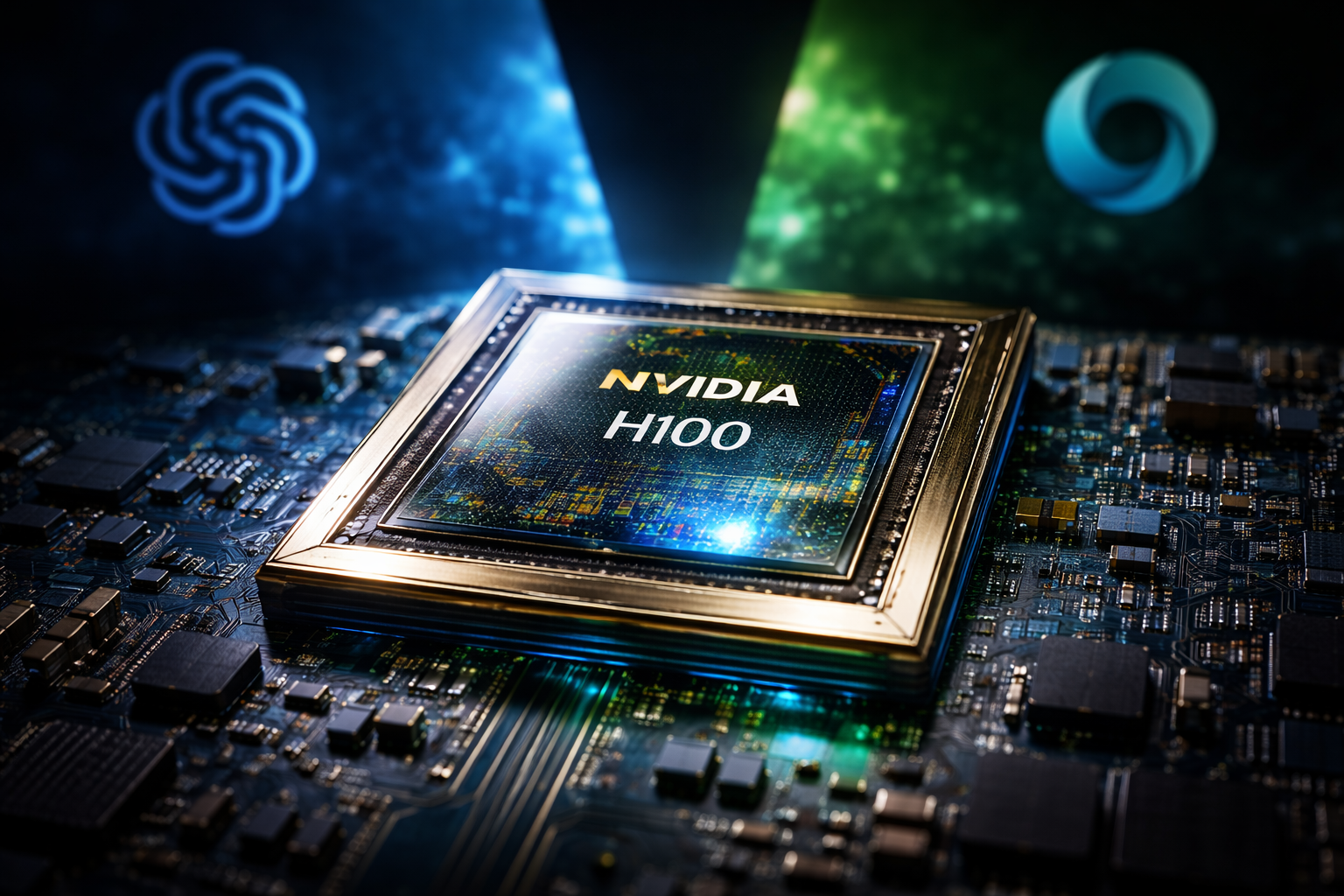
Nvidia has been one of the greatest beneficiaries of the generative AI boom. Its chips power the training and inference infrastructure behind OpenAI, Anthropic, Google, Meta, and virtually every other major AI lab. So when CEO Jensen Huang confirmed that Nvidia is pulling back from its investment relationships with OpenAI and Anthropic specifically, the market paid attention.
Thank you for reading this post, don't forget to subscribe!The explanation Huang offered raises more questions than it answers, and the strategic implications for the AI ecosystem are worth understanding carefully.
What Jensen Huang Actually Said
Huang confirmed that Nvidia has been reducing the depth of its direct investment relationship with OpenAI and Anthropic. He framed this as a natural evolution: Nvidia is primarily a chip and platform company, and its deepest relationships are through the compute stack rather than as an equity investor in AI labs.
But the timing and specificity of the statement suggest something more deliberate. Nvidia is not simply letting older investment relationships mature. The company appears to be making an active decision about how and where it positions itself in the AI ecosystem at a moment when the competitive dynamics are shifting rapidly.
The Core Tension
Nvidia’s business depends on AI labs buying its chips. OpenAI and Anthropic are two of the largest purchasers of Nvidia GPU clusters in the world. The relationship is commercially essential. Maintaining equity stakes in these companies while also selling them infrastructure creates a structural conflict of interest that becomes more complex as those companies grow into direct competitors of Microsoft, Google, and Amazon.
By pulling back from investment stakes, Nvidia can position itself as a neutral infrastructure provider, the picks-and-shovels company in an AI gold rush, rather than a company that is betting on particular players in the lab competition.
Key Context: Nvidia’s H100 and H200 GPU clusters are the primary training hardware for both OpenAI’s GPT series and Anthropic’s Claude series. The chip relationship is more commercially significant to Nvidia than any equity stake in the labs.
What This Means for OpenAI and Anthropic
In practical terms, the reduction in Nvidia’s investment relationship does not affect OpenAI’s or Anthropic’s access to Nvidia hardware. The chip supply relationship is governed by separate commercial agreements and is not contingent on Nvidia being an investor.
What changes is the symbolic and strategic alignment between Nvidia and the two leading AI labs. Nvidia is effectively signaling that it sees its role as infrastructure provider to the entire industry, not as a stakeholder in particular outcomes.
The Investment Landscape for AI Labs
OpenAI’s primary investors include Microsoft (which has committed over $13 billion), SoftBank, and a range of venture firms. Anthropic is backed primarily by Amazon and Google, which have each committed billions in investment and cloud credits. The equity stakes from these hyperscaler investors dwarf anything Nvidia held.
Nvidia’s pullback does not leave OpenAI or Anthropic underfunded. It does suggest that the easy money phase of AI lab investment, where every major tech company and chipmaker was eager to stake a claim, may be giving way to a more selective and strategically deliberate investment environment.
Why Top Talent Is Leaving OpenAI and xAI
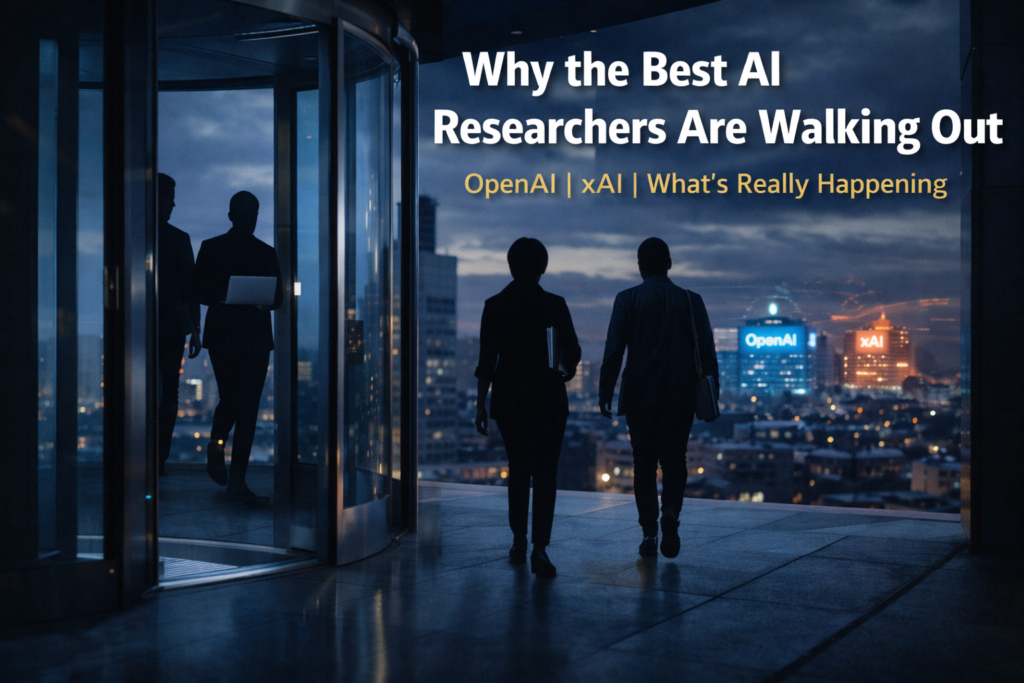
The Nvidia pullback arrives alongside separate reporting on talent attrition at OpenAI and Elon Musk’s xAI. Key researchers and engineers are leaving both companies for a mix of compensation, culture, and mission-alignment reasons. The combination of reduced investment enthusiasm from infrastructure partners and internal talent challenges creates a more complex picture of AI lab health than the headline valuation numbers suggest.
For Anthropic, which has positioned itself as the safety-focused alternative with a strong research culture, the talent dynamics are somewhat different. But the broader market signal, that the uncritical enthusiasm for AI lab investment is moderating, affects everyone.
What Happens to Nvidia If AI Demand Cools?
The bear case for Nvidia involves a scenario where AI training demand plateaus as the largest labs build sufficient compute reserves, and inference efficiency improvements reduce the per-query hardware cost. In that scenario, the insatiable demand for H100 and H200 GPUs slows, and Nvidia’s extraordinary revenue growth moderates.
Nvidia’s positioning as a neutral infrastructure provider, rather than an investor in specific lab outcomes, is partly a hedge against this scenario. If the competitive landscape among AI labs shifts and different players emerge as dominant, Nvidia wants to be the company that whoever wins still needs to buy chips from.
Bottom Line: Nvidia’s pullback from OpenAI and Anthropic is a strategic repositioning, not a vote of no-confidence in AI’s future. It reflects the maturation of a relationship that no longer needs equity stakes to be commercially essential. Jensen Huang’s explanation may be incomplete, but the underlying logic is sound.
Related: A16z Raises $1.7B for AI Infrastructure | Why Top Talent Is Leaving OpenAI | Anthropic Pentagon Blacklist
Related Posts

Stay Informed With the Latest & Most Important News
Previous Post
Next Post



Top News
- Google’s AI-Powered Workspace in Search Is Now Available to All US Users: Here Is What Actually Changed

- How Jeffrey Epstein Used Silicon Valley’s Network: What the Reporting on Reid Hoffman and Tech’s Elite Reveals
- Where to Preorder the iPhone 17E Right Now: Every Deal Ranked Before the March 11 Launch
- Google Apps Experience and Games Level Up: The Programs That Could Cut Your Play Store Commission Significantly

- Google Is Not Waiting for a Settlement: It Just Killed the 30 Percent App Store Fee Unilaterally











Advertisement