

Now Reading: AI Translations Are Adding Hallucinated Facts to Wikipedia Articles: Here Is What Is Happening
-
01
AI Translations Are Adding Hallucinated Facts to Wikipedia Articles: Here Is What Is Happening
AI Translations Are Adding Hallucinated Facts to Wikipedia Articles: Here Is What Is Happening

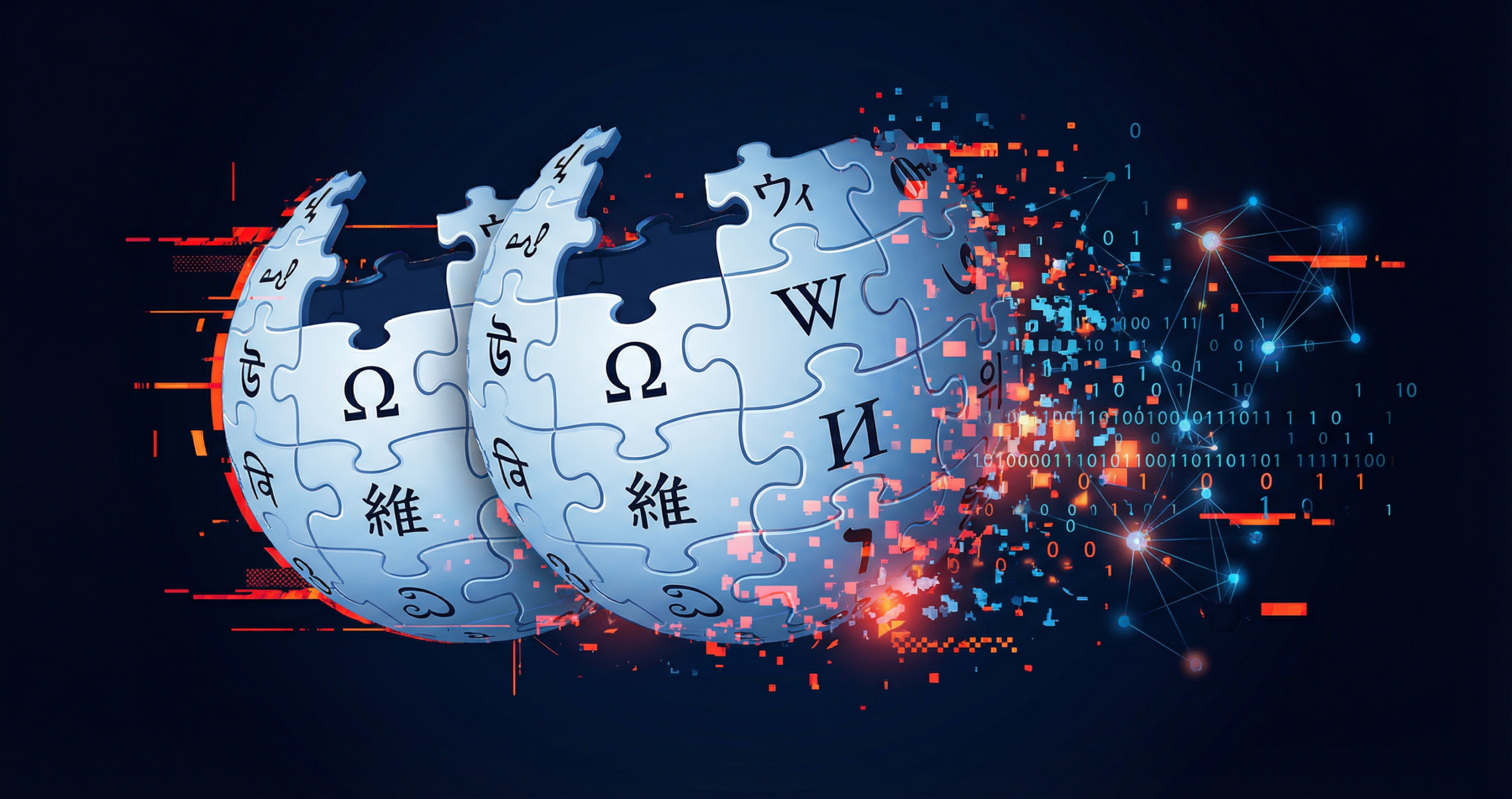
Wikipedia has a new problem, and it originates from an organization trying to help. A non-profit called the Open Knowledge Association has been using artificial intelligence to translate Wikipedia articles into additional languages at scale. The efficiency gains are real and significant. But so are the errors: AI-generated hallucinations are appearing in translated articles, and in some cases, those fabricated facts are making their way into the published encyclopedia.
Thank you for reading this post, don't forget to subscribe!This story is not just about Wikipedia. It is about a fundamental tension between the speed and scale that AI translation enables and the accuracy standards that reference content demands.
What Happened: The Open Knowledge Association’s AI Translation Project
The Open Knowledge Association launched an AI-assisted translation initiative with a genuinely good goal: Wikipedia exists in many languages, but coverage across those languages is wildly unequal. An article that is comprehensive and well-sourced in English may have only a stub version in Hindi, Swahili, or Romanian. AI translation offered a way to rapidly expand multilingual coverage and make Wikipedia’s knowledge more globally accessible.
The problem is that the AI models being used for translation were not simply translating existing content. They were, in some cases, adding information that did not exist in the source articles, a behavior pattern known as hallucination. Facts were being invented, names misattributed, dates changed, and in some instances entirely fabricated claims were being inserted into what appeared to be translated versions of well-sourced Wikipedia content.
What Is an AI Hallucination?
AI hallucination occurs when a large language model generates content that sounds plausible and confident but is factually incorrect or entirely fabricated. The term comes from the way the AI “sees” patterns in its training data and extrapolates beyond them in ways that produce convincing-sounding but false outputs.
Hallucinations are a known and persistent challenge in all current large language models. The best models have significantly reduced hallucination rates compared to earlier generations, but they have not eliminated them. In a translation context, the risk is amplified because the human reviewer may not have deep expertise in the source content, making it harder to catch invented facts that sound plausible.
How Bad Is the Problem?
The scope of the contamination is still being assessed by Wikipedia’s volunteer editorial community. Some languages are more affected than others, and the severity of the hallucinations varies from minor factual inaccuracies to substantial fabrications. In the worst cases, information about living individuals, historical events, and scientific findings has been altered or invented in translated articles.
The challenge for Wikipedia’s editors is significant. Manually reviewing AI-translated content at the scale the Open Knowledge Association has been operating requires a level of editorial bandwidth that the volunteer community does not have uniformly across all language versions.
Scale Context: Wikipedia contains more than 62 million articles across 300+ languages. Even a small percentage of AI-translated articles containing hallucinated content represents thousands of potentially false entries in the encyclopedia.
Wikipedia’s Response and the Challenge of AI-Assisted Editing
Wikipedia’s editorial guidelines already prohibit the introduction of unsourced or invented content. The question is whether existing policies are sufficient to catch AI-generated hallucinations that are embedded within otherwise accurate translations.
Several language editions of Wikipedia have implemented or are considering moratoriums on AI-translated content until better verification workflows are in place. The English Wikipedia has strict policies around AI-generated content already, but smaller language editions with fewer active editors are more vulnerable to undetected hallucinations slipping through.
The Broader Problem: AI in Reference Content
Wikipedia is not the only reference platform grappling with AI-generated content quality. Academic databases, news archives, and educational platforms are all wrestling with the same fundamental question: how do you benefit from AI’s efficiency while protecting against its accuracy failures?
The answer, at least for now, involves human review. But human review at scale costs money and time that non-profit content projects often do not have in abundance. This creates a structural vulnerability that bad actors and careless deployers alike can exploit.
What This Means for How We Use AI-Generated Information
The Wikipedia hallucination story is a practical reminder about something that every critical consumer of AI-generated content needs to understand: AI models do not know what they do not know. They generate confident-sounding output regardless of whether that output is grounded in fact.
For reference content, technical documentation, medical information, and legal guidance, this limitation is not an acceptable tradeoff. The efficiency gains of AI generation are only valuable if the accuracy bar is met. Where it is not met, the output is worse than nothing, because it carries the false credibility of an authoritative source.
- Always verify AI-generated factual claims against primary sources
- Treat AI-translated content with the same skepticism as AI-generated content
- Check article edit histories and talk pages for flagged AI translation issues on Wikipedia
- For academic and professional use, rely on human-reviewed sources first
Bottom Line: The Open Knowledge Association had admirable goals. The execution reveals a fundamental problem with deploying AI in reference content without sufficient human oversight. Wikipedia’s volunteer community is working to address it, but the scale of the challenge is real.
Related: Google Gemini AI Lawsuit | AI and Culture Wars | How AI Models Hallucinate and Why It Matters
Stay Informed With the Latest & Most Important News



Top News
- Google’s AI-Powered Workspace in Search Is Now Available to All US Users: Here Is What Actually Changed

- How Jeffrey Epstein Used Silicon Valley’s Network: What the Reporting on Reid Hoffman and Tech’s Elite Reveals

- Where to Preorder the iPhone 17E Right Now: Every Deal Ranked Before the March 11 Launch

- Google Apps Experience and Games Level Up: The Programs That Could Cut Your Play Store Commission Significantly

- Google Is Not Waiting for a Settlement: It Just Killed the 30 Percent App Store Fee Unilaterally













Advertisement