

Now Reading: 6G, Modular Phones, and the Rise of Robot Smartphones: A Look at What Is Coming
-
01
6G, Modular Phones, and the Rise of Robot Smartphones: A Look at What Is Coming
6G, Modular Phones, and the Rise of Robot Smartphones: A Look at What Is Coming

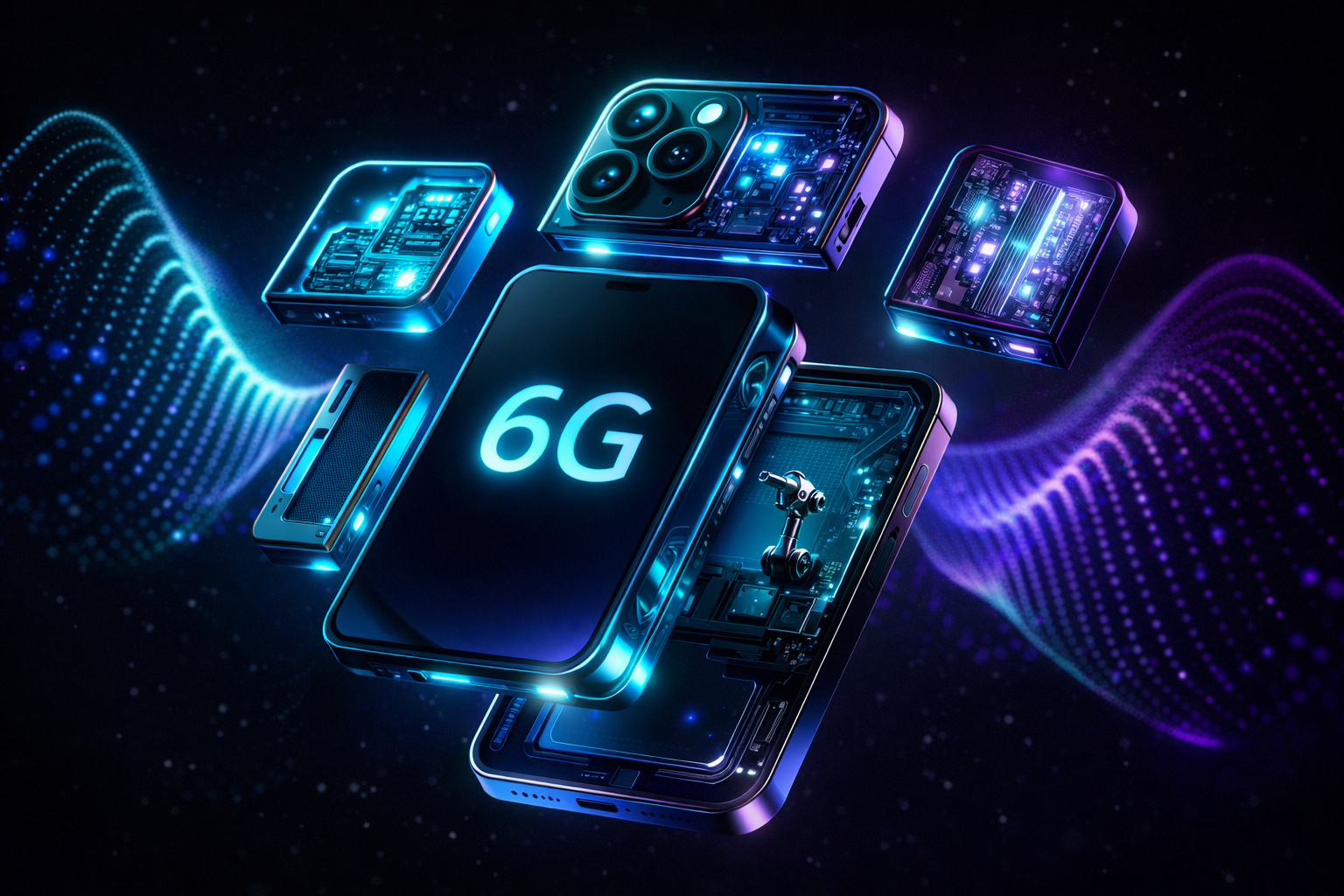
The smartphone has been the defining consumer technology device for 15 years. Its form factor has not changed dramatically in that time. A glass slab in your pocket, increasingly capable, increasingly expensive, but fundamentally the same object. The next phase of mobile technology is shaping up to be genuinely different.
Thank you for reading this post, don't forget to subscribe!6G connectivity, modular hardware architectures, AI-native operating systems, and yes, phones with robotic components are all in active development or early commercial deployment. Here is a grounded look at what is actually coming and when.
6G: What It Is and When It Arrives
Fifth-generation (5G) networks are still in the process of reaching meaningful global coverage. In many parts of the world, including the United States, reliable 5G is concentrated in urban centers and along major transportation corridors. Despite incomplete 5G deployment, the industry is already standardizing 6G.
6G is expected to arrive in commercial form around 2030, with early trials and demonstrations from major telecoms and device makers beginning in 2027-2028. The theoretical performance improvements over 5G are dramatic: peak data rates approaching 1 terabit per second, latency below 0.1 milliseconds, and network architectures that can support simultaneous connection of vastly more devices per square kilometer.
What 6G Actually Changes for Users
Raw speed numbers for wireless networks rarely translate into direct user experiences, because the bottleneck quickly shifts from the network to the device’s processor, the server’s response time, or the application’s architecture. What 6G changes more fundamentally is the infrastructure ceiling for AI-native applications.
- Real-time holographic communication at consumer quality
- AI inference running on distributed network infrastructure rather than purely on-device
- Seamless connectivity across devices without handoff latency
- Dense IoT environments in smart cities with millions of connected sensors
- Immersive AR/VR experiences without the latency that currently makes them nausea-inducing
Modular Phones: The Concept That Keeps Coming Back
Project Ara, Google’s modular smartphone initiative, was cancelled in 2016 after it became clear that the engineering challenges of making modular hardware work reliably in a pocket-sized device were more complex than anticipated. Nearly a decade later, the modular phone concept is returning, driven by different technology and different market conditions.
The Fairphone has demonstrated that modular design for repairability is commercially viable at modest scale. Newer concepts from Asian manufacturers are pushing modular design toward extensibility: the ability to add a higher-quality camera module, a larger battery pack, or specialized sensors without replacing the entire device.
Why Modular Is Harder Than It Sounds
The fundamental engineering challenge of modular phones is the conflict between modularity and the miniaturization that smartphone buyers expect. Every connector, interface standard, and alignment mechanism adds size, weight, and potential failure points. The market has consistently voted for thinner and lighter over swappable and upgradeable.
The sustainability argument for modular phones, extending device lifespans and reducing e-waste, is compelling enough that regulatory pressure in Europe and California is beginning to mandate repairability features. That regulatory push may accomplish what consumer preference alone did not: making modularity a competitive requirement rather than a niche preference.
Robot Phones: From Novelty to Legitimate Category
Honor debuted what it calls a Robot Phone at MWC 2026, a device that integrates small robotic actuators and cameras in ways that allow physical movement and repositioning of camera components. The reaction was appropriately skeptical at first, but the underlying technology is more interesting than the headline suggests.
The integration of mechanical elements into smartphones is genuinely new territory. Most current smartphone innovation is silicon-limited: faster chips, better sensors, higher-resolution displays. Adding physical actuation opens a category of functionality that pure electronics cannot achieve: cameras that physically move to track subjects, microphone arrays that orient toward sound sources, haptic systems with more nuanced physical feedback than current vibration motors.
The Infinix Pininfarina Collaboration
Another example of hardware-design experimentation: Infinix’s Note 60 Ultra was co-designed with Italian automotive designer Pininfarina. The collaboration brings automotive design aesthetic to smartphone form factor, with deliberate attention to materials, tactile surfaces, and the kind of premium sensory experience that luxury car design is built around.
It is a niche product. But it signals that smartphone manufacturers are looking beyond iterative spec improvements to find differentiation in unexpected places.
Foldable Phones: The Category That Is Finally Working
Foldable phones are no longer experimental. Samsung’s Galaxy Z Fold and Z Flip lines have matured through multiple generations and developed genuine user communities. Google’s Pixel Fold has added credibility. The form factor is more durable, more software-integrated, and more competitively priced than it was two years ago.
The foldable category is where some of the most interesting 6G-era device design is happening. A foldable device with 6G connectivity, a modular camera system, and an AI-native OS would represent a genuinely different kind of computing device from today’s glass slab. The timeline for that convergence is probably late this decade.
AI-Native Smartphones: The Biggest Near-Term Change
While 6G and robot phones are 2028-2030 stories, AI-native smartphone experiences are happening now. Google’s Gemini integration into Pixel devices, Apple Intelligence across iPhone 16 and later, and Samsung’s Galaxy AI features are all expressions of the same underlying shift: AI is moving from a feature to an architectural foundation.
Devices designed from the ground up with AI inference as a primary use case, with dedicated neural processing units, direct integration with cloud AI services, and interfaces built around AI interaction rather than app launching, are the next generation of smartphone.
Bottom Line: The smartphone is not going away. But it is about to go through its most significant transformation since the original iPhone. 6G, modular hardware, AI-native software, and even robotic elements are all converging on a device category that has been visually static for too long. The next five years will be interesting.
Related: Honor Robot Phone Review | Samsung Galaxy S26 Camera Analysis | Apple Intelligence Features Explained
Stay Informed With the Latest & Most Important News


Top News
- Google’s AI-Powered Workspace in Search Is Now Available to All US Users: Here Is What Actually Changed

- How Jeffrey Epstein Used Silicon Valley’s Network: What the Reporting on Reid Hoffman and Tech’s Elite Reveals

- Where to Preorder the iPhone 17E Right Now: Every Deal Ranked Before the March 11 Launch
- Google Apps Experience and Games Level Up: The Programs That Could Cut Your Play Store Commission Significantly

- Google Is Not Waiting for a Settlement: It Just Killed the 30 Percent App Store Fee Unilaterally













Advertisement